Proudly serving Phoenix, Mesa, Scottsdale, Glendale, Chandler, Tempe & surrounding areasCall or Text 24/7: 480-264-9793
Aerial view of Phoenix, AZ residential neighborhoods, saguaro cacti, and desert landscape during golden hour.

Selective Demolition in Phoenix, AZ for Targeted Renovation & Structural Alterations

Phoenix Demolition Co. provides selective demolition in Phoenix for residential renovations, commercial tenant improvements, and targeted exterior removal. Our crews remove chosen walls, rooms, flooring, concrete, pools, garages, sheds, and site debris while protecting the building or property elements that stay. We work across housing that ranges from 1950s ranch homes in Arcadia and the Willo Historic District to newer stucco construction in the Sun Corridor. Whether the project is a kitchen off 7th Street or a shuttered strip center near Sky Harbor, the scope starts with a clear line between what goes and what remains.

Selective demolition depends on sequencing, utility control, and the right tool for each material. We saw-cut concrete along defined lines, hand-demolish interior partitions before structural work, and use hydraulic breakers where full material removal is required. Load-bearing scopes are coordinated with the project contractor's structural engineer and the applicable Phoenix permit requirements. Because Phoenix is in a federal PM10 nonattainment area, we follow Maricopa County Air Quality Department dust-control requirements on every site.

Before demolition begins, we screen for asbestos-containing materials and lead-based paint in line with EPA RRP and Arizona Department of Environmental Quality NESHAP notification rules. Call for a free walkthrough and written scope before anything is removed.

Phoenix Demolition Co. provides selective demolition in Phoenix and the surrounding Valley cities of Scottsdale, Tempe, Mesa, Glendale, and Chandler.

★ ★ ★ ★ ★4.9/5 Average Rating · 20+ Years of Experience · Thousands of Customers Helped · Licensed & Insured · Residential & Commercial

Selective Demolition Options & Benefits

What Is Selective Demolition?

Selective demolition removes specific building components, such as a wall, bathroom, or slab section, without disturbing the rest of the structure. It is suited to Phoenix renovations where the shell or surrounding finishes need to remain in service.

The work may combine hand tools, saw-cutting, walk-behind breakers, hydraulic hammers, excavators, cranes, or forklifts depending on the material and access. The method is selected around precision rather than simply using the largest available machine.

A walkthrough establishes what comes out first, which utilities need to be capped, where debris will move, and what needs protection. Load-bearing work also requires temporary shoring, engineering coordination, and the appropriate permits.

Benefits of Targeted Removal

A controlled scope lets a renovation move forward without paying to remove usable areas or exposing finished spaces to unnecessary damage. It also creates a clearer handoff for the contractors who follow.

  • Preserves walls, slabs, finishes, and systems outside the approved scope
  • Coordinates load-bearing removal with temporary shoring and engineering input
  • Caps exposed plumbing and electrical stubs before the next trade arrives
  • Uses defined saw cuts to limit vibration near neighboring concrete and masonry
  • Pulls reusable cabinetry, fixtures, and dimensional lumber intact when practical
  • Sorts concrete, masonry, and asphalt for Valley recycling yards where possible
  • Keeps shared commercial common areas clear through planned debris staging
  • Leaves the work area cleared for remodeling, paving, landscaping, or foundations
Targeted Removal Services

Selective Demolition Services

Our Phoenix demolition scopes range from room-by-room interior work to concrete, pools, detached structures, and commercial sites. Each service is planned around access, material type, utility conditions, debris handling, and the parts of the property that must remain untouched.

Residential Demolition

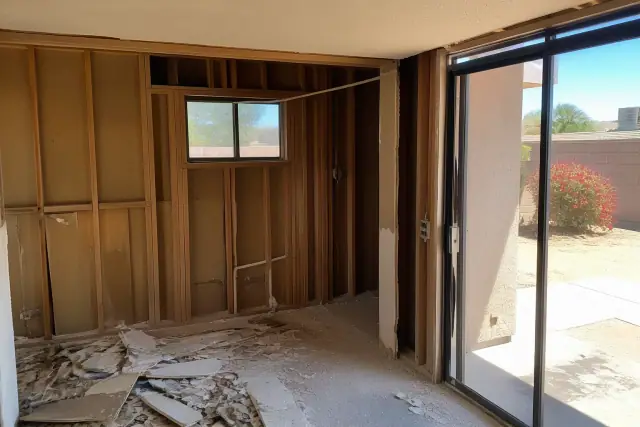
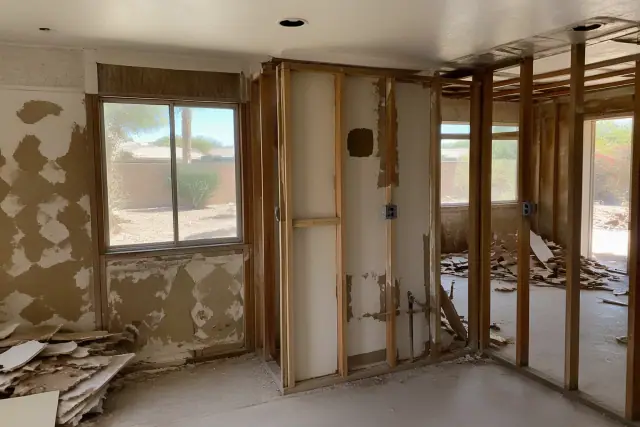
Interior of a residential home under demolition with exposed wall framing and scattered debris in Phoenix, AZ.

We scope kitchens, bathrooms, bedrooms, and living spaces room by room. Cabinets, countertops, tile, appliances, drywall, subfloor, carpet, vinyl, or hardwood can be removed according to the remodel plan; Phoenix kitchen demolition typically starts in the $1,000-and-up range depending on size and utility relocation.

Request Estimate

Commercial Demolition

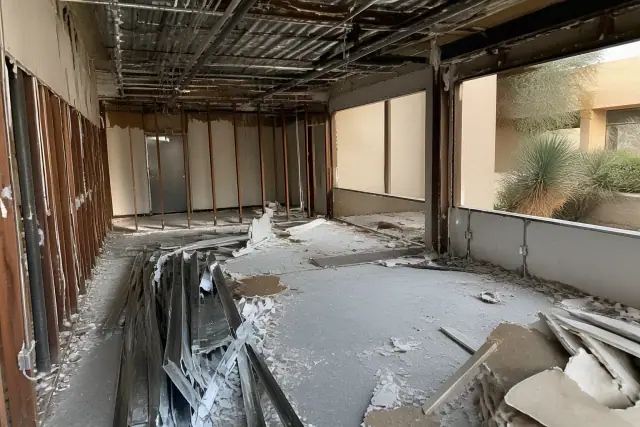
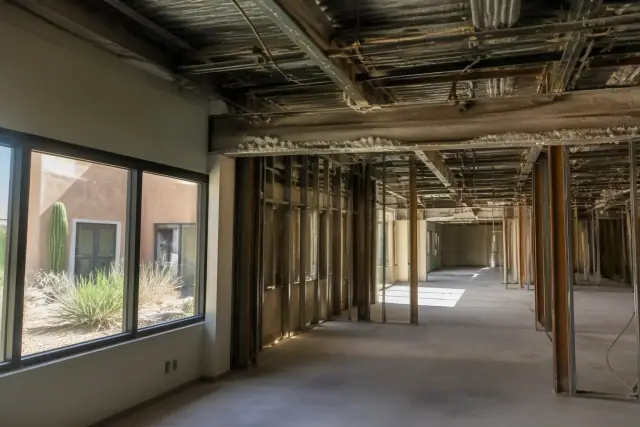
Interior of a commercial office space undergoing selective demolition in Phoenix, AZ with exposed studs and jobsite debris.

Office partitions, drop ceilings, raised floors, storefront millwork, signage, mezzanines, conveyor supports, and dock equipment can be removed for tenant improvements or property repositioning. We plan around business hours, shared walls, glass storefronts, loading docks, common areas, and crane or forklift access.

Request Estimate

Interior Demolition

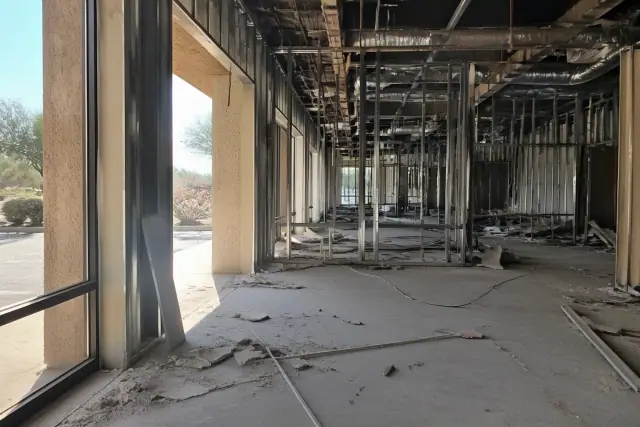
Interior demolition of a commercial office in Phoenix, AZ, showing exposed metal studs and building debris.

Interior demolition covers flooring, ceilings, partitions, fixtures, drywall, and insulation inside the shell. Plywood runners protect adjacent finished areas, insulation is kept separate from general debris, and exposed utility stubs are patched or capped as the layout opens up.

Request Estimate

Concrete Demolition & Removal

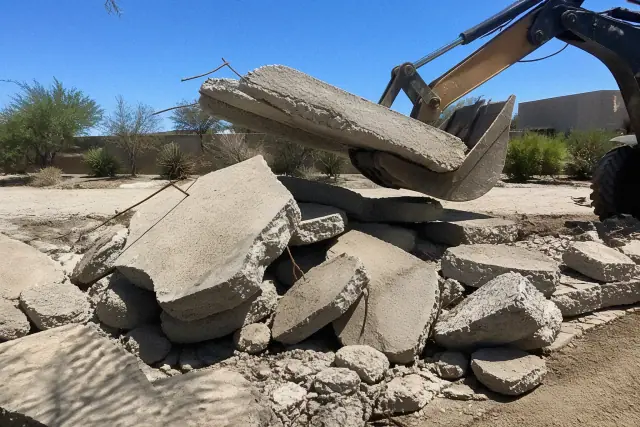
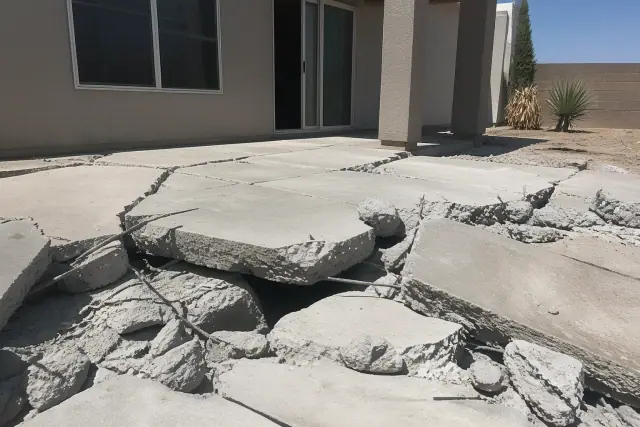
Concrete demolition and removal of a fractured slab with exposed rebar at a jobsite in Phoenix, AZ.

Slabs, foundations, driveways, walkways, pool decks, curbing, and masonry walls are saw-cut and broken according to thickness and reinforcement. Hydraulic hammers or walk-behind breakers handle the material, while defined cuts help protect adjacent block, brick, and slab sections.

Request Estimate

Pool Demolition & Removal

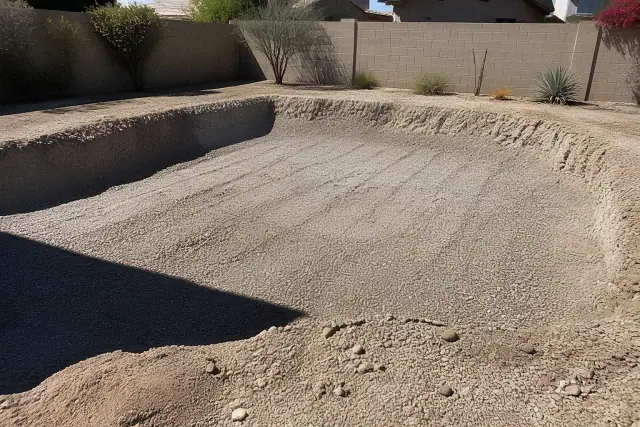
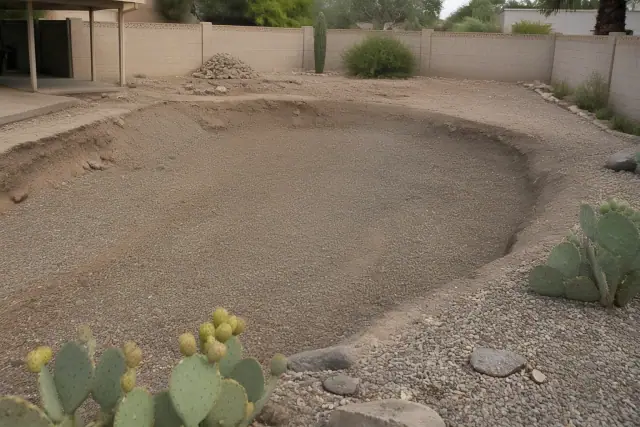
Hollowed cavity of a removed swimming pool filled with aggregate for soil compaction at a job site in Phoenix, AZ.

In-ground pools may be fully excavated or partially removed by breaking the bottom for drainage and backfilling with engineered fill compacted in 12-inch lifts. Above-ground pool structures are typically a one-day removal, while concrete pads, decking, coping, pumps, grading, and hauling are scoped separately as needed.

Request Estimate

Garage & Shed Demolition

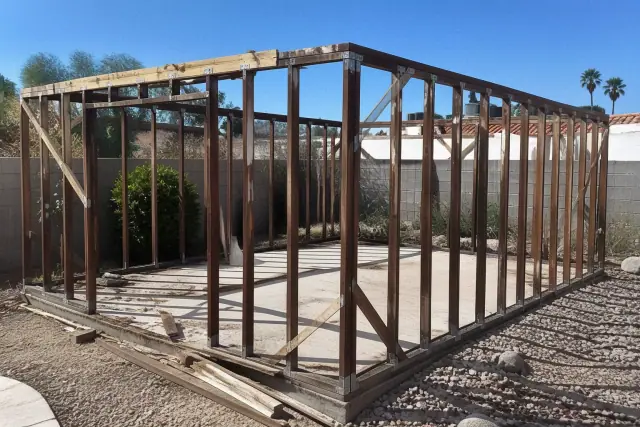
Skeletal wooden frame of a garage being demolished in a desert yard in Phoenix, AZ.

Detached wood-frame and block garages or backyard sheds can be dismantled by hand or with an excavator based on size and site access. The scope can include the slab, roofing, insulation, scrap wood, debris hauling, and grading for a future ADU, driveway, or cleared yard.

Request Estimate
Methods by Project Scope

Types of Selective Demolition Options

The right method changes with the component, structural role, substrate, access, and next construction phase. These options cover the most common targeted-removal scopes described for Phoenix homes, commercial interiors, hardscape, pools, and redevelopment sites.

Room-by-room residential deconstruction in progress at a job site in Phoenix, AZ with exposed wall studs and debris.

Room-by-Room Deconstruction

Residential interiors are dismantled in a sequence that exposes the work safely while limiting damage to surrounding rooms. Material type determines the tools, protection, labor, and disposal plan.

  • Kitchen cabinets, countertops, backsplashes, and appliances
  • Bathroom tile, vanities, tubs, toilets, and capped plumbing
  • Carpet, vinyl, hardwood, tile, adhesive, and subfloor
  • Drywall, ceiling tile, insulation, and older exposed wiring
  • Non-load-bearing partitions for open-plan reconfiguration
Request Estimate
Broken concrete slab with exposed rebar during a selective demolition project in Phoenix, AZ.

Concrete and Masonry Removal

Phoenix's caliche-heavy soil and slab-on-grade construction make concrete removal a frequent part of renovation and redevelopment. Reinforcement, thickness, access, and vibration concerns shape the removal method and cost.

  • Saw-cut slab sections sized for controlled breaking and loading
  • Hydraulic hammers or walk-behind breakers matched to thickness
  • Rebar-aware removal for reinforced slabs and commercial curbing
  • Foundation excavation down to undisturbed soil
  • Concrete and masonry routed for crushing and aggregate reuse
Request Estimate
Residential pool removal and backfill excavation with gravel and prickly pear cacti in Phoenix, AZ.

Pool Removal and Backfill

Aging gunite and above-ground pools require different approaches. The plan accounts for the shell, drainage, fill, compaction, surrounding hardscape, equipment, and how the yard will be used afterward.

  • Full removal of the in-ground shell
  • Partial removal with the bottom broken for drainage
  • Engineered fill placed and compacted to limit settling
  • Decking, coping, pump equipment, and concrete pad removal
  • Final grading for sod, pavers, or the next backyard plan
Request Estimate
Interior of a commercial demolition site in Phoenix, AZ, showing exposed structural studs and ceiling utility conduits.

Structural Component Removal

Load-bearing walls, beams, roof sections, second-story additions, and chimneys need load-path analysis and an engineer-reviewed sequence. Temporary support is verified before the structural component is cut or removed.

  • Structural engineer coordination before demolition
  • Phoenix permit coordination for structural work
  • Temporary shoring, screw jacks, or rated beam supports
  • Shore, cut, remove, and replace in the reviewed order
  • Permanent framing or beam installation by the project team
Request Estimate
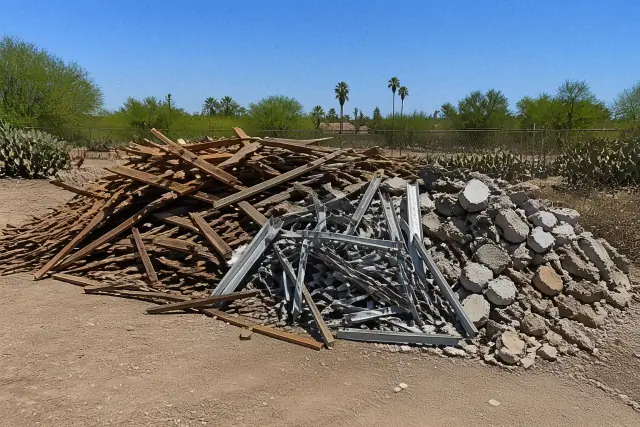
Sorted construction waste and debris from a demolition site in Phoenix, AZ, with desert soil and cacti in the background.

Commercial Site Clearing

Commercial redevelopment may call for targeted removal of concrete pads, curbing, asphalt, or exterior site elements rather than a complete teardown. Breaking, loading, dust suppression, sorting, grading, and compaction are coordinated with the next phase.

  • Concrete paving, pads, curbing, and asphalt sections
  • Debris sized for efficient equipment loading
  • Water spray during breaking and loading for dust suppression
  • Base grading and compaction for paving or construction
  • Compaction testing when required by the general contractor
Request Estimate
Finding Your Right Fit

Choosing the Right Selective Demolition Approach

A useful demolition plan begins with the renovation objective, then works backward through structural conditions, utilities, hazardous-material screening, access, protection, and debris movement. A written scope keeps those decisions visible to the owner, contractor, engineer, property manager, and trades who follow.

Written Demolition Sequencing

Every job begins with a walkthrough and a written sequence covering removal order, utility caps, temporary support, debris routes, and the items to protect. This turns a broad demolition request into a controlled construction handoff.

Engineering and Permit Coordination

Structural scopes are coordinated with the City of Phoenix, the project contractor, and the structural engineer as required. The plan addresses load paths, permits, temporary support, removal order, and permanent replacement framing before a bearing component is disturbed.

Dust and Material Controls

Water spray controls dust during breaking and loading, while debris is separated for compliant disposal or recycling where possible. Screening for asbestos-containing materials and lead-based paint is addressed before demolition starts rather than after materials are disturbed.

What Sets Us Apart

Why Choose Us for Selective Demolition in Phoenix?

Phoenix Demolition Co. combines defined removal boundaries with practical site controls for occupied homes, shared commercial buildings, hardscape, pools, and structural components. Request a free walkthrough to review access, utilities, materials, permits, protection, hauling, and the written scope before work begins.

Get a Free Walkthrough

Unwanted Interior Components

A remodel may need a kitchen, bathroom, partition, ceiling, or built-in removed while the rest of the home remains. Selective demolition separates those components in sequence and protects the occupied or finished areas beyond the scope.

Load-Bearing Wall Changes

Creating a larger opening or removing a structural component without a load-path plan can compromise the building. We identify bearing conditions, coordinate engineering and permits, install temporary support, and follow the reviewed removal order.

Worn Flooring and Tile

Original 1960s and 1970s tile in neighborhoods such as Encanto-Palmcroft can sit beside finishes that need to remain. Tile, hardwood, carpet, vinyl, adhesive, and subfloor each require a different removal pace to protect the slab and adjacent surfaces.

Unwanted Concrete

Old slabs, driveways, walkways, foundations, pool decks, and curbing can block a new footprint or site plan. Saw cuts define the removal boundary, and breaker selection accounts for caliche-heavy soil, slab thickness, rebar, vibration, and nearby masonry.

Aging Pool Removal

An aging gunite pool may no longer fit the property's maintenance or renovation plan. Full and partial removal carry different costs and settling considerations, so the scope needs to define the shell, backfill, compaction, decking, equipment, and finished grade.

Obsolete Commercial Buildouts

Vacant suites, retail pads, warehouses, and light-industrial spaces often retain partitions, ceilings, millwork, supports, or dock equipment that does not match the next tenant. Targeted removal clears those elements while accounting for shared HVAC, storefront glass, loading access, and leasing schedules.

How it works

Our Selective Demolition Process

The process moves from definition and risk control to ordered removal and a clean handoff. Each step keeps the work focused on the approved scope while protecting people, utilities, structural elements, finished surfaces, and neighboring property.

01.

Walkthrough and Written Scope

We walk the site to mark what stays and what goes, review access and adjacent finishes, and document the sequence. The written scope also identifies debris staging, hauling, and the next construction phase.

02.

Utilities and Material Screening

Utilities are located and capped before removal. Asbestos-containing materials and lead-based paint are screened for and addressed before they are disturbed, with older wiring or other unexpected conditions referred to the appropriate trade.

03.

Permits, Engineering, and Shoring

Structural work is coordinated with the structural engineer and City of Phoenix permit requirements. Temporary shoring, screw jacks, or beam supports are installed and verified before a load-bearing component comes out.

04.

Sequenced Removal

Non-structural finishes and components are removed before structural elements. Hand demolition, saw-cutting, breakers, excavators, cranes, or forklifts are used only where the scope and site access call for them.

05.

Debris Sorting and Hauling

Reusable cabinetry, fixtures, and dimensional lumber are pulled intact when practical. Concrete, masonry, and asphalt are separated for Valley recycling yards where possible, while insulation and other materials follow their appropriate disposal path.

06.

Cleanup and Project Handoff

The work area is swept and cleared after removal. Exterior scopes are graded or compacted as required so the site is ready for remodeling, a new footing, paving, landscaping, pavers, or another planned use.

Plan What Stays and What Goes

Schedule a Selective Demolition
Walkthrough

Tell us which walls, rooms, finishes, concrete, pool, outbuilding, or commercial components need to come out. We will review the site and provide a free written estimate that defines access, sequencing, protection, debris, and the next phase.

Selective Demolition Help

Selective Demolition FAQs

These answers cover demolition methods, scope, pricing, permits, materials, recycling, and service coverage for Phoenix renovation and redevelopment projects.

Call Our Experts

Look for a written scope that defines removal limits, sequencing, utility controls, debris handling, and what must stay protected. A careful contractor should ask about asbestos testing on pre-1980s properties, follow Maricopa County Air Quality Department dust rules, coordinate permits for structural or full demolition, and plan for hidden utilities or undocumented additions. Phoenix Demolition Co. provides a free walkthrough and written estimate before demolition begins.

Full demolition removes an entire structure down to grade. Selective demolition removes a chosen wall, room, slab section, or other component while the rest of the building stays intact and functional. It requires added planning, protection, saw-cutting, hand demolition, or temporary shoring because renovation elements remain around the work.

Selective site demolition removes specific exterior elements, such as part of a driveway, an old pool, a detached shed, or a parking-lot section, without disturbing the rest of the property. Utility lines, irrigation, property boundaries, neighboring structures, access, and the future site plan all affect the sequence.

The three general categories are manual, mechanical, and selective demolition. Manual work uses hand tools and small equipment for precise removal, while mechanical demolition uses excavators, hydraulic breakers, and other heavy equipment for larger structures or thick materials. Selective demolition may use either method to remove specific components while preserving the rest.

The process begins with a walkthrough and written scope that defines what stays, what goes, and the removal sequence. Utilities are located and capped, asbestos or lead concerns are screened, and temporary shoring is installed for load-bearing work. Non-structural materials come out first, debris is sorted as work proceeds, and the site is cleared for the next phase.

Costs vary by scope, material, access, and hazardous-material needs. Interior demolition in Phoenix commonly runs roughly $1,668 to $3,336; general demolition averages around $800, with a typical $644 to $1,000 range for smaller jobs. Full house demolition with a basement can exceed $13,000, with a broader range of roughly $8,400 to $17,900, while demolition commonly runs $4 to $17 per square foot depending on the structure and materials. A free written estimate provides a project-specific figure.

Permits are generally needed when demolition affects the building envelope, additions, load-bearing elements, or structural systems. Cosmetic interior work such as cabinet or non-structural partition removal may not need a separate permit, but the scope should be confirmed before work begins. Phoenix Demolition Co. handles permit coordination as part of project planning.

Interior scopes can include cabinets, countertops, appliances, vanities, tubs, toilets, flooring, ceilings, drywall, insulation, fixtures, and non-load-bearing partitions. Load-bearing walls and beams can also be removed when engineering, permits, temporary shoring, and replacement framing are incorporated into the plan.

Kitchen demolition in the Phoenix area typically starts in the $1,000-and-up range. Square footage, cabinet and countertop materials, flooring or subfloor removal, and plumbing or electrical relocation all affect the final scope. A walkthrough and written estimate clarify exactly what is included.

Full removal excavates the pool shell entirely and costs more, but it avoids settling concerns that can remain after partial removal. Partial removal breaks the bottom for drainage and backfills the pool with engineered fill compacted in 12-inch lifts. Decking, coping, pump equipment, pads, and final grading should also be defined in the scope.

Driveways, walkways, slabs, pool decks, and masonry are saw-cut along defined boundaries before they are broken into manageable sections. Hydraulic hammers or walk-behind breakers are selected for the thickness and reinforcement, while the cut-and-remove sequence helps reduce vibration and dust near adjacent concrete, block, or brick.

Cabinetry, fixtures, and dimensional lumber are often pulled intact for salvage rather than crushed. Concrete and masonry can go to Valley recycling yards for crushing and aggregate reuse, while asphalt millings also retain resale value. Material condition, contamination, and the project scope determine what can be recovered.

Phoenix Demolition Co. provides selective demolition, residential demolition, and full-service demolition support throughout Phoenix. The surrounding Valley service area also includes Scottsdale, Tempe, Mesa, Glendale, and Chandler.