Proudly serving Phoenix, Mesa, Scottsdale, Glendale, Chandler, Tempe & surrounding areasCall or Text 24/7: 480-264-9793
Aerial view of Phoenix, AZ residential neighborhoods, saguaro cacti, and desert landscape during golden hour.

Phoenix Demolition Co.: Residential Demolition, Commercial Demolition, Interior Demolition in Phoenix, AZ

Phoenix Demolition Co. is a local demolition contractor serving Phoenix, Arizona, and communities across the Valley. We handle residential demolition, commercial demolition, interior and selective demolition, concrete and pool removal, structural teardown, garage and shed removal, flooring removal, and site clearing. From 1950s ranch homes in Encanto to tilt-up warehouses along the Sun Corridor, our crews plan each project around the structure, access, and next use of the property.

Phoenix projects can involve caliche-heavy soil, historic review, floodplain questions, hazardous materials, utility disconnects, and strict dust controls. We pull required permits through the City of Phoenix Planning and Development Department and coordinate relevant utility shutoffs before demolition starts. Our planning covers the structure, access, neighboring uses, and the property's intended next phase. You work with the crew that will plan the equipment, safety controls, hauling, and site preparation for your property.

Request a free demolition estimate with permitting and disposal costs broken out clearly. Ask about same-week start availability for your project.

★ ★ ★ ★ ★4.9/5 Average Rating · 20+ Years of Experience · Thousands of Customers Helped · Licensed & Insured · Residential & Commercial

Phoenix Demolition Credentials

Free Estimates
Licensed & Bonded
Insured Demolition
Phoenix Area Crew
Residential, Commercial & Specialty Work

Demolition Services Across Phoenix

Choose the scope that fits your property, from a targeted interior strip-out to a complete structural teardown and graded lot. Every service is planned around permits, utilities, access, debris handling, and the work that follows demolition.

Residential Demolition

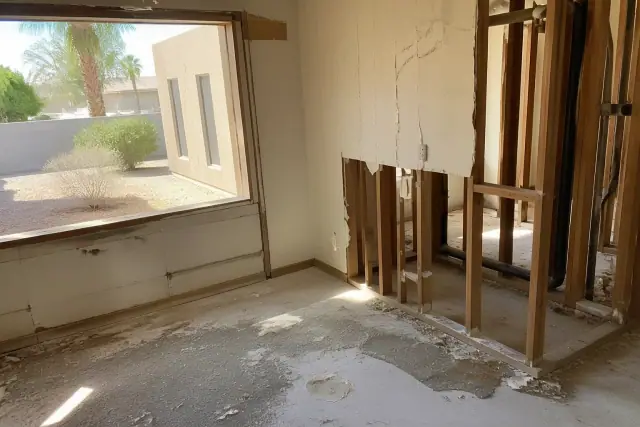
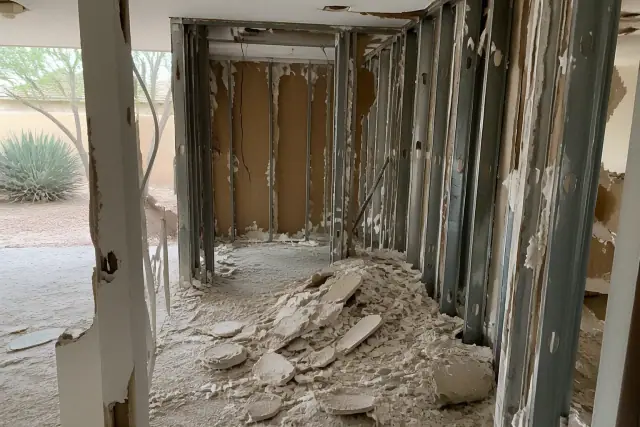
Interior of a house undergoing demolition with exposed wall framing and debris in Phoenix, AZ.

We demolish block, frame, masonry, and stucco-over-frame homes, handling the required City of Phoenix permit as part of the quoted scope. Complete teardowns can include slab removal, coordinated utility disconnects, grading, and preparation for new construction.

Explore Service

Commercial Demolition

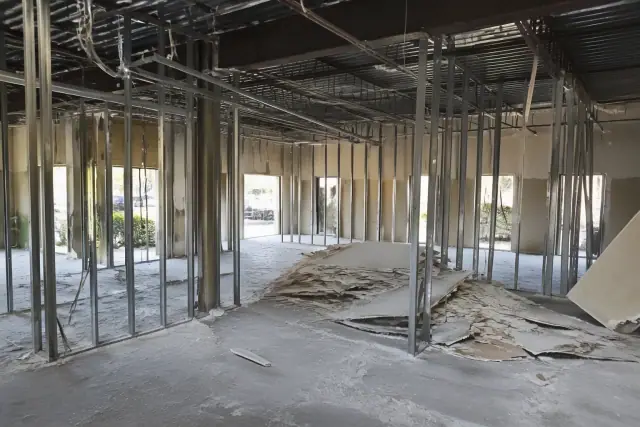
Commercial demolition progress of an office interior with exposed metal studs and debris in Phoenix, AZ.

Office, retail, warehouse, and industrial demolition may require tenant coordination, phased work, loading-dock access, and utility shutoffs. We sequence tilt-up concrete, steel removal, crane work, and excavator work around the site safety plan.

Explore Service

Interior Demolition

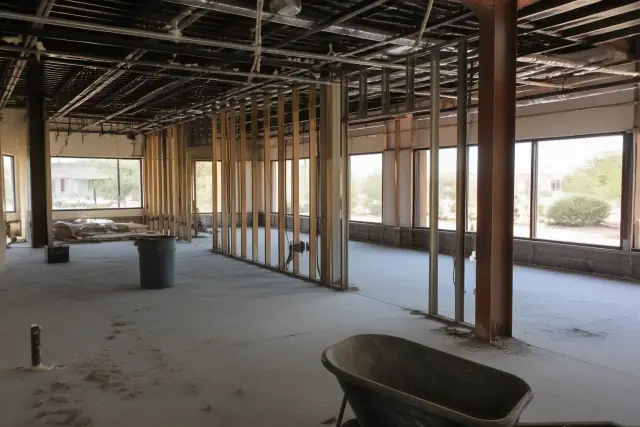
Interior demolition site with exposed studs and overhead conduits in Phoenix, AZ.

Interior wall removal, cabinet demolition, fixture removal, and strip-outs prepare homes and tenant spaces for renovation. We protect load-bearing elements identified by the structural engineer and preserve the shell, mechanical systems, or building envelope when the scope requires it.

Explore Service

Selective Demolition

Interior of a building in Phoenix, AZ undergoing selective demolition with exposed wall studs and overhead metal conduits.

Selective demolition removes specific walls, beams, finishes, or building sections without disturbing the rest of the structure. Engineered shoring and coordination with the architect or structural engineer guide any load-bearing work.

Concrete Demolition & Removal

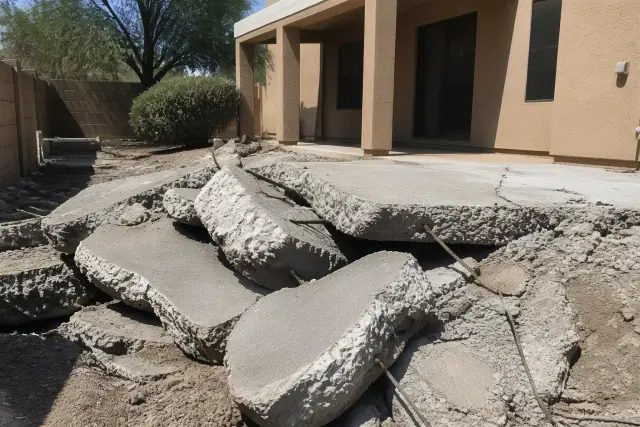
Broken concrete slab with exposed rebar at a residential demolition site in Phoenix, AZ.

We remove foundations, patios, pool decks, interior slabs, driveways, and parking areas using saw cuts and hydraulic breakers selected for the site. Reinforced concrete is hauled to a facility that accepts it for recycling when possible.

Pool Demolition & Removal

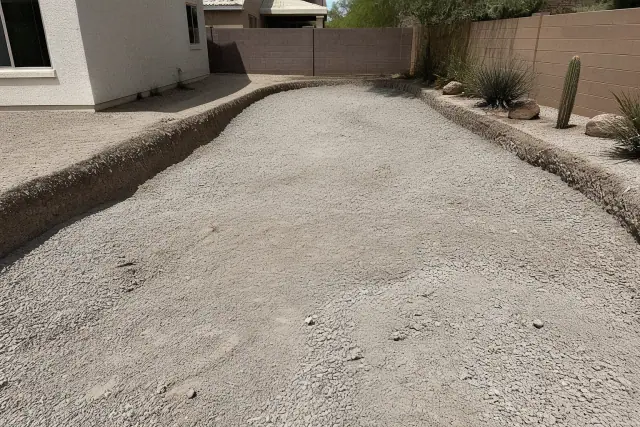
Excavated pool basin filled with aggregate during a demolition project in Phoenix, AZ.

Pool demolition is available as full removal or partial fill for unused and damaged Phoenix pools. Both methods require a permit and a city-approved drainage plan before backfill begins.

Structural Demolition

Structural demolition of an interior partition wall with exposed metal studs and debris in a Phoenix, AZ construction site.

Structural demolition covers complete buildings and major structural components, with utility shutoffs, engineered sequencing, equipment staging, and debris volume built into the plan. Commercial scopes may use cranes and excavators for tilt-up panels and steel framing.

Garage & Shed Demolition

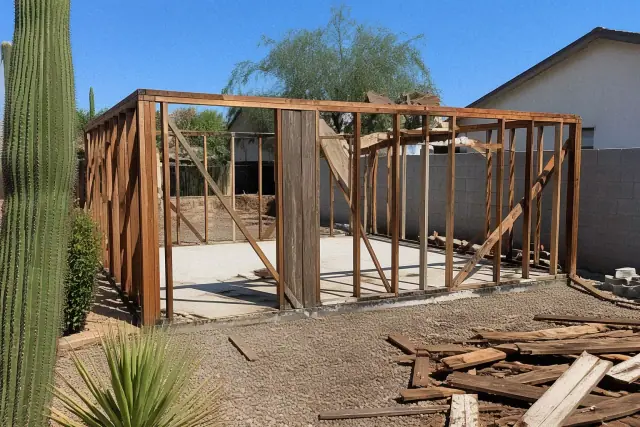
Skeletal wooden frame of a garage being demolished in Phoenix, AZ with desert landscaping.

We remove detached block garages, attached frame garages, sheds, carports, and accessory structures. Shared electrical service is disconnected before work, and many cleared shed removals can be completed as a same-day job once utilities are confirmed.

Flooring Removal

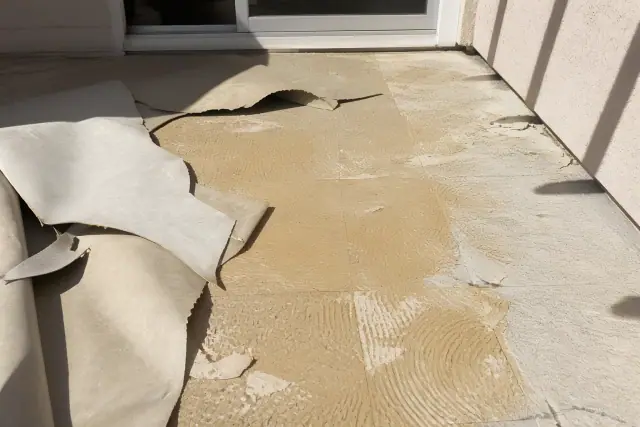
Vinyl flooring being removed from a subfloor during a renovation project in Phoenix, AZ.

Flooring removal covers tile, hardwood, carpet, and glued-down vinyl found in Phoenix homes built through the 1970s and 80s. Older adhesives are evaluated for asbestos risk before demolition disturbs them.

Site Clearing & Debris Removal

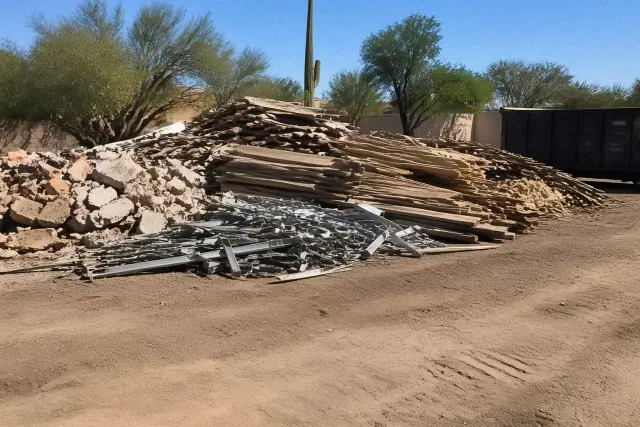
Pile of construction debris including wood, metal, and masonry at a job site in Phoenix, AZ.

Full site clearing removes structures, vegetation, and surface debris, followed by rough grading and compaction for the next phase. Debris hauling is included in every demolition scope we run.

Complex Project Support

Specialized Demolition Planning & Support

Phoenix spans 517.9 square miles and has more than 1.6 million residents, while the surrounding metro area is near 5.19 million. As postwar and mid-century buildings reach an average service life of around 71 years, demolition plans may need environmental testing, agency coordination, safety controls, and careful site preparation in addition to equipment.

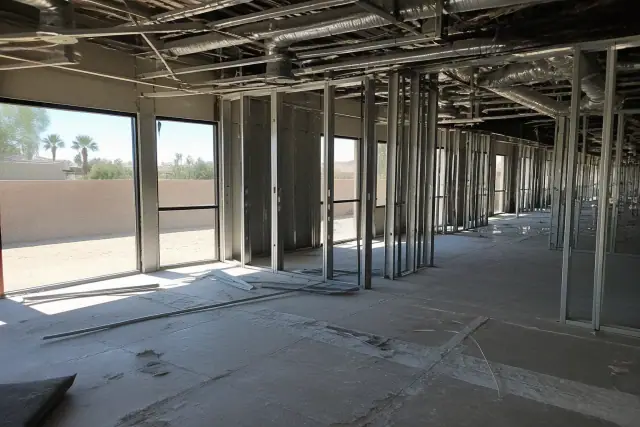
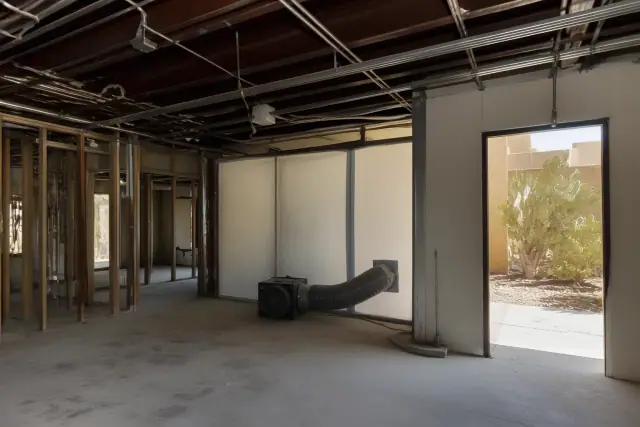
Hazardous materials abatement site showing exposed studs, conduits, and desert landscape through an open door in Phoenix, AZ.

Hazardous Materials & Abatement Coordination

Older homes and commercial buildings can contain asbestos or other materials that must be addressed before demolition. We coordinate testing and abatement scheduling so the permitted teardown begins with a clear scope.

  • Asbestos testing before work on buildings constructed before 1989
  • Review of flooring adhesive, insulation, and roofing materials
  • Abatement scheduled before demolition disturbs affected areas
  • Well abandonment coordinated to Arizona Department of Water Resources standards
  • Septic abandonment documented for the demolition permit file
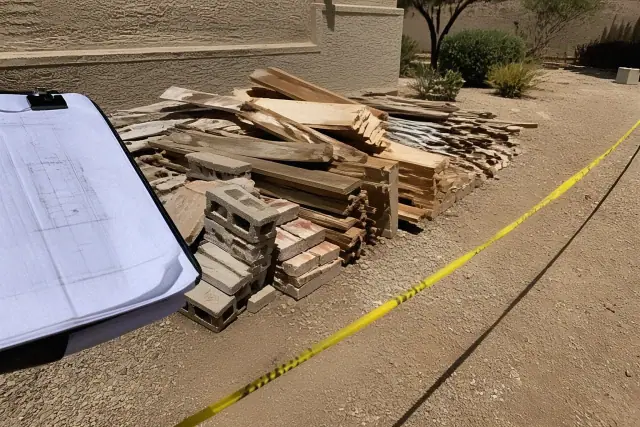
Sorted construction debris, blueprints, and caution tape at a worksite in Phoenix, AZ.

Permits, Utilities & Site Reviews

Permits and disconnects are part of the project plan before equipment arrives. The required path depends on the property, its utility providers, and whether historic or floodplain review applies.

  • City of Phoenix demolition permit application and inspection scheduling
  • Electrical disconnect coordination with Salt River Project when applicable
  • Water-service coordination with the City of Phoenix Water Services Department
  • Historic preservation review for some Central Phoenix properties
  • Maricopa County floodplain considerations for affected parcels
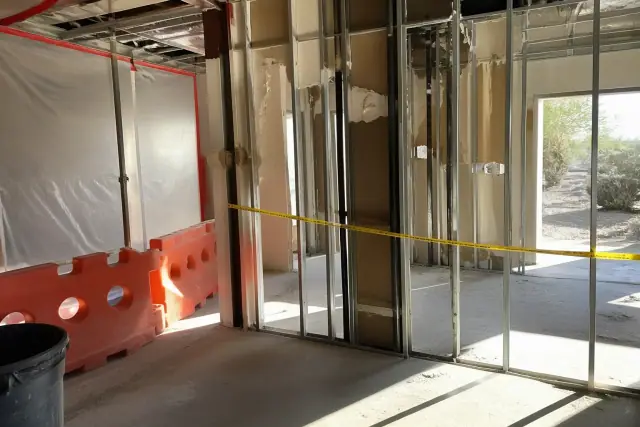
Partially dismantled drywall and metal stud wall with safety barriers at a commercial jobsite in Phoenix, AZ.

Commercial Phasing & Safety Controls

Commercial and industrial demolition must account for neighboring businesses, site access, heavy materials, and ongoing operations. We build phasing and safety controls around the actual structure and property schedule.

  • Tenant and adjacent-suite coordination
  • Loading-dock access and center management schedules
  • Crane and excavator sequencing for heavy components
  • Site safety plans aligned with OSHA construction standards
  • Fall protection, silica dust controls, and confined-space procedures
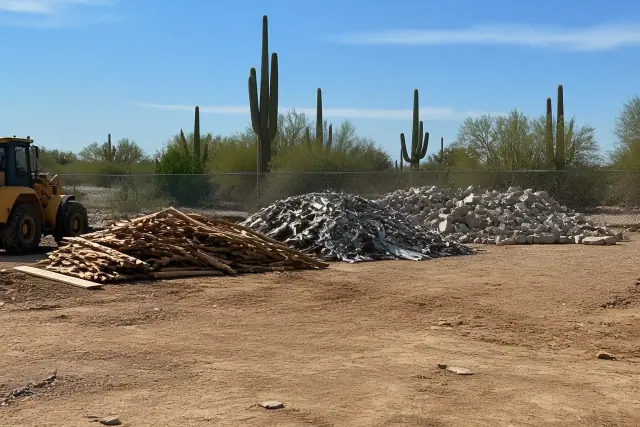
Sorted construction waste pile with wood, metal, and masonry at a site preparation job in Phoenix, AZ.

Site Clearing, Recycling & Site Preparation

Demolition is not finished until debris is removed and the property is prepared for what comes next. We sort recoverable material where possible and shape the site for construction or landscaping.

  • Structures, vegetation, and surface debris removed
  • Concrete, metal, and wood separated where practical
  • Recyclable material sent to accepting Maricopa County facilities
  • Non-recyclable material taken to a licensed landfill
  • Rough grading and compaction for the next project phase
Local Planning from Permit to Cleanup

Why Property Owners Choose Our Crew

Phoenix Demolition Co. combines local permit knowledge with equipment planning for residential and commercial properties. Our scope follows the project from the first walkthrough through controlled teardown, debris hauling, and site preparation.

Permit and Inspection Coordination

We coordinate the City of Phoenix demolition permit, required inspections, and relevant utility disconnects before work begins. Historic, floodplain, drainage, well, or septic reviews are added when the property requires them.

Phoenix Permit & Site Knowledge

Our planning accounts for City of Phoenix permits, utility providers, Central Phoenix historic review, county floodplain questions, and local dust-control requirements. That local coordination helps surface requirements before demolition is scheduled.

Residential & Commercial Capability

Our crews handle scopes ranging from one interior wall or backyard shed to houses, retail buildings, offices, warehouses, and industrial facilities. Equipment and sequencing are matched to access, structural materials, neighboring uses, and debris volume.

Plan for Conditions Before Work Begins

Demolition Challenges We Plan Around

Hazardous materials, hidden utilities, structural surprises, limited access, and Phoenix weather can change a demolition plan quickly. Site walkthroughs, utility locates, testing, engineered scopes, and equipment staging help identify those risks before the crew is scheduled.

Request Free Estimate

Hazardous Materials Behind Finishes

Asbestos can appear in flooring adhesive, ceiling texture, pipe insulation, roofing, and other older materials. Testing and required abatement must be completed before affected areas are disturbed.

Unmarked or Connected Utilities

Unmarked lines and shared electrical or water service create damage and safety risks. Utility locates and confirmed disconnects are completed before demolition begins.

Structural Surprises Behind Walls

Original plans do not always show every load-bearing condition or later alteration. Selective work is scoped with the architect or structural engineer and supported with engineered shoring where required.

Tight Access and Shared Walls

Urban lots, occupied commercial centers, and shared-wall suites leave little room for equipment or debris staging. Phased work and access planning help protect adjacent spaces and keep routes usable.

Monsoon, Heat, and Dust

Monsoon conditions can delay outdoor work, while extreme summer heat affects crew and equipment staging. Silica and demolition dust are controlled under the applicable Maricopa County Air Quality Department rules.

Caliche and Reinforced Concrete

Caliche and expansive clay contribute to uneven slab cracking, while foundations and tilt-up panels add weight and reinforcement. Saw cuts, hydraulic breakers, cranes, or excavators are selected to suit the material and nearby utilities.

From Walkthrough to Prepared Site

Our Demolition Project Process

Each project follows a documented sequence that addresses the structure, hazards, permits, utilities, safety controls, demolition method, debris, and final site condition.

01.

Walkthrough and Written Scope

We inspect the structure, access points, surrounding property, visible utilities, materials, and intended end condition. The estimate separates demolition, permitting, disposal, and any related preparation work.

02.

Testing and Engineering Review

Older materials are evaluated for asbestos risk, and wells or septic systems are identified when applicable. Load-bearing selective demolition is coordinated with the architect or structural engineer before the scope is finalized.

03.

Permits and Utility Disconnects

We submit the demolition permit, schedule required inspections, and confirm disconnects with the relevant providers. Historic preservation, floodplain, drainage, well, or septic requirements are added when the property calls for them.

04.

Safety, Access, and Equipment Plan

The crew plans dust control, fall protection, equipment staging, loading routes, neighboring uses, and phasing. Breakers, excavators, cranes, and hauling capacity are matched to the structure and site.

05.

Controlled Demolition

Demolition follows the approved scope and sequence, from selective interior removal to full structural teardown. The crew protects elements that remain and adjusts staging around access and weather conditions.

06.

Sorting, Hauling, and Site Preparation

Concrete, metal, and wood are separated for recycling where possible, and remaining debris goes to a licensed landfill. The cleared site is rough graded and compacted when that preparation is included.

Demolition Service Areas Across Greater Phoenix

Phoenix Demolition Co. serves residential and commercial properties across the city and the greater metropolitan area. Our core coverage includes the following source-supported communities, neighborhoods, and commercial corridors.

  • Phoenix
  • Encanto
  • Roosevelt Row
  • Coronado
  • Camelback Corridor
  • North Phoenix
  • Desert Ridge
  • Deer Valley
  • Sunnyslope
  • South Phoenix
  • Laveen
  • Ahwatukee
  • Scottsdale
  • Tempe
  • Mesa
  • Chandler
  • Arcadia
  • West Phoenix
  • Sky Harbor Area
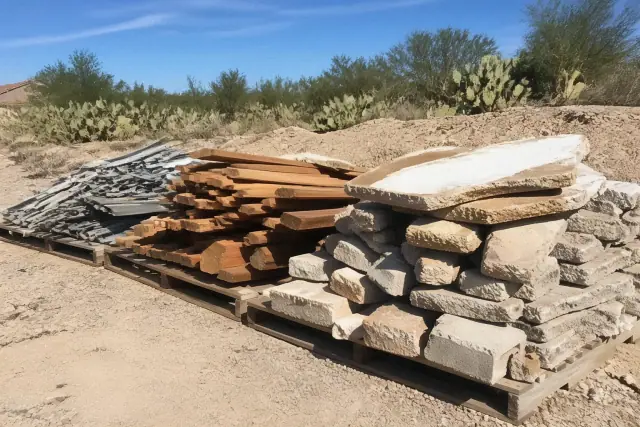
A neat stack of sorted construction waste including wood, metal, and masonry at a demolition site in Phoenix, AZ.

Honest Feedback from Phoenix Customers

Customer Experiences
★ ★ ★ ★ ★

We hired the crew for an interior strip-out before remodeling our Phoenix ranch home. They explained what needed to stay, coordinated the permit, and left the shell clean for the next trade.

MS
Maria S.Phoenix Homeowner
★ ★ ★ ★ ★

Our unused pool needed more planning than we expected. The team walked us through the full-removal and partial-fill options, handled the drainage details, and kept the yard organized.

JR
Jordan R.Scottsdale Property Owner
★ ★ ★ ★ ★

They phased our tenant-space demolition around the neighboring businesses and loading access. Communication was clear, and the space was ready for our build-out crew when promised.

PK
Priya K.Tempe Business Owner
★ ★ ★ ★ ★

We needed a shed, an old slab, and years of debris cleared from the property. The crew confirmed the utilities first, hauled everything away, and left a level area for our next project.

DM
Daniel M.Chandler Homeowner
Plan Your Project

Schedule Your
Demolition
Estimate

Tell us what needs to come down, what must remain, and how you plan to use the site afterward. We provide a free estimate that separates demolition, permitting, and disposal, and you can ask about same-week start availability.

Phoenix Demolition Help

Frequently Asked Demolition Questions, Answered

Use these answers to understand typical costs, permits, timing, testing, debris handling, and project planning in Phoenix. Call Phoenix Demolition Co. when you are ready to discuss the conditions at your property.

Call Our Crew

House demolition in Arizona typically costs $8,000 to $25,000, depending on square footage, foundation type, and site access. Asbestos abatement, well abandonment, and septic abandonment are separate scopes that can increase the total. Our free estimate separates demolition, permitting, and disposal costs.

The City of Phoenix requires a demolition permit before interior or exterior demolition begins on residential and commercial structures. The process includes plan submission, confirmed utility disconnects, and inspection scheduling. Some Central Phoenix properties also require historic preservation review.

Common challenges include hazardous materials, unmarked utilities, structural conditions that do not match the plans, limited site access, and shared commercial walls. Phoenix monsoon weather and dust-control requirements can also affect scheduling and equipment staging. A walkthrough, utility locates, and testing help identify these risks early.

Permits, inspections, and confirmed utility disconnects establish the conditions that must be met before demolition starts. Planning them early helps prevent the crew from arriving before the site is ready and identifies historic, floodplain, drainage, well, or septic requirements that may affect the scope.

Once permits are approved, a single-family house demolition usually takes one to three days. Commercial tenant-space selective demolition can take a few days to a couple of weeks, while pool demolition typically takes one to two days for partial fill or removal. Larger commercial and industrial projects vary with structure size, phasing, and debris volume.

Testing is strongly advised and often required before demolition of a building constructed before 1989. Asbestos may be present in flooring adhesive, popcorn ceiling texture, pipe insulation, roofing, and other materials. We coordinate testing and abatement scheduling in line with Arizona Department of Environmental Quality requirements.

Concrete, metal, and wood are separated for recycling where accepting construction and demolition facilities are available in Maricopa County. Material that cannot be recycled goes to a licensed landfill. Concrete may be processed into recycled aggregate rather than landfilled.

Full removal takes out the pool structure, while partial fill removes or opens part of the shell before approved backfill is placed. Either method requires a permit and a city-approved drainage plan in Phoenix. The right scope depends on the property and the intended use of the yard.

Selective demolition is appropriate when specific walls, finishes, beams, or building sections need to come out while the remaining shell or structure stays. Load-bearing work requires a clear engineered scope and shoring where necessary. A full teardown is used when the entire structure and often its foundation must be removed.

Utility disconnects must be confirmed before demolition begins. Depending on the property, coordination may involve Salt River Project and the City of Phoenix Water Services Department. We include the relevant disconnects and inspection steps in the project plan.

The concrete is broken, hauled, and routed for recycling when possible. The exposed pad can then be rough graded and compacted for the builder's soils testing and next construction phase. The exact end condition is defined in the demolition scope.

Wells must be properly sealed under Arizona Department of Water Resources standards to protect the aquifer. Septic systems on properties not connected to city sewer require abandonment under Maricopa County Environmental Services requirements. The completed abandonment is documented for the permit file.

Yes, when the structure and site allow it. Office, retail, and tenant-space work can be sequenced around adjacent suites, center schedules, loading-dock access, and utility shutoffs. The phasing plan is established before demolition begins.

We serve Phoenix neighborhoods and corridors including Encanto, Roosevelt Row, Coronado, Arcadia, North Phoenix, Desert Ridge, Deer Valley, Sunnyslope, South Phoenix, Laveen, Ahwatukee, and West Phoenix. Our greater metro coverage also includes Scottsdale, Tempe, Mesa, and Chandler.