Proudly serving Phoenix, Mesa, Scottsdale, Glendale, Chandler, Tempe & surrounding areasCall or Text 24/7: 480-264-9793
Aerial view of Phoenix, AZ residential neighborhoods, saguaro cacti, and desert landscape during golden hour.

Residential Demolition in Scottsdale, AZ for Whole-House & Interior Projects

Phoenix Demolition Co. provides residential, commercial, and interior demolition throughout Scottsdale. Our scope also includes selective and structural demolition, concrete and pool removal, garage and shed teardown, flooring removal, and site clearing with debris hauling. We work on full house teardowns, remodel preparation, redevelopment parcels, and other project types across neighborhoods from Old Town Scottsdale to North Scottsdale.

Scottsdale demolition projects can involve 1950s and 60s homes, caliche soil, tight infill lots, shared footings, and local dust-control rules. We walk the property before quoting so structure age, materials, utility connections, equipment access, and adjoining improvements are part of the plan. Structures built before 1980 receive an asbestos and hazardous-material survey before demolition begins. Our licensed and insured team coordinates permits, disconnects, demolition, debris hauling, and final cleanup around the actual scope.

Scottsdale grew from roughly 217,000 residents in 2010 to over 241,000 as of the most recent census, sustaining teardown, remodel, and rebuild activity across established neighborhoods. Request a free, itemized demolition estimate for your property.

★ ★ ★ ★ ★4.9/5 Average Rating - 20+ Years of Experience - Scottsdale Demolition Contractor Specialists - Residential & Commercial
Demolition Services
Demolition Services Across Scottsdale, AZ

Choose the service by what must come out, what must remain, the material involved, and the access available for equipment and hauling. Scottsdale coverage includes Old Town, McCormick Ranch, Gainey Ranch, Grayhawk, DC Ranch, Pinnacle Peak, Troon, and the Rio Verde and North Scottsdale corridor. For location-specific planning outside this area, see our Glendale, AZ service page.

Residential Demolition

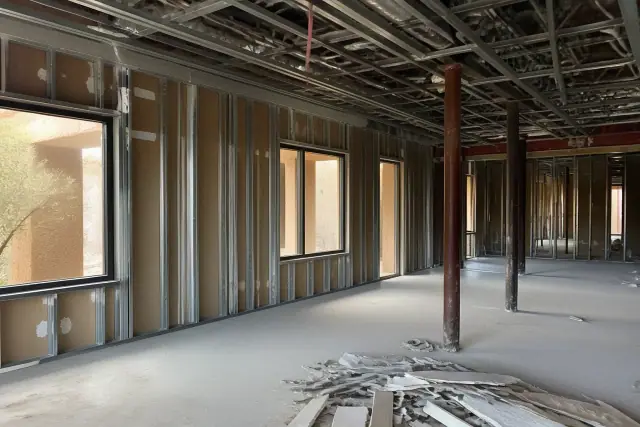
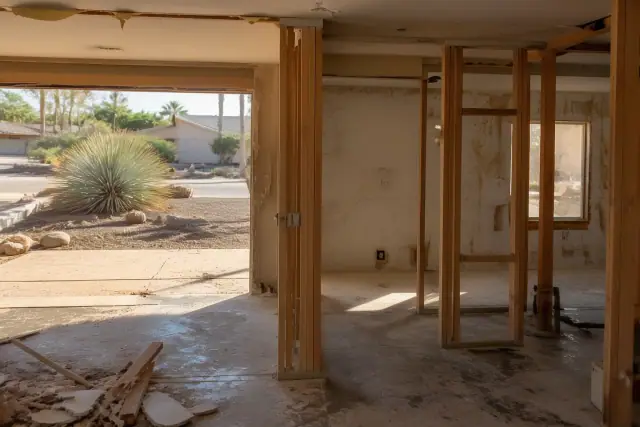
Residential demolition in progress with exposed wall studs and debris inside a home in Scottsdale, AZ.

Full house demolition includes utility disconnects, any required asbestos survey, mechanical teardown, slab removal, debris hauling, and site cleanup. Partial demolition removes a wing, addition, or defined section while shoring and protecting the structure that stays. Explore Service

Explore Service

Commercial Demolition

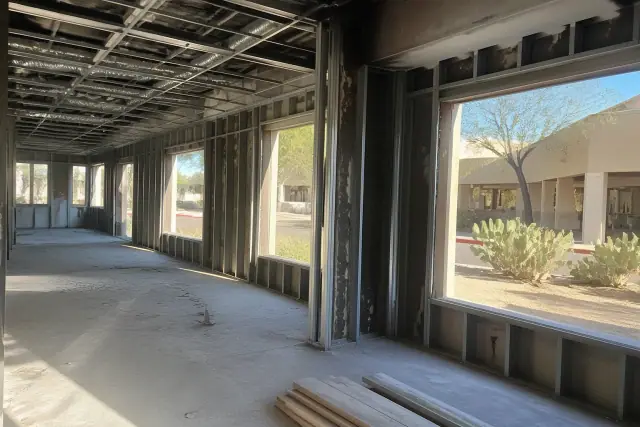
Interior commercial demolition site with exposed metal conduits and debris on the floor in Scottsdale, AZ.

Commercial scopes range from strip-mall interior gutting to full building demolition for redevelopment along Scottsdale Road and the Loop 101 corridor. Work includes a pre-demolition survey, an OSHA-compliant safety plan, engineering coordination for load-bearing removals, regulated-material manifests, and a documented debris plan. Explore Service

Explore Service

Interior Demolition

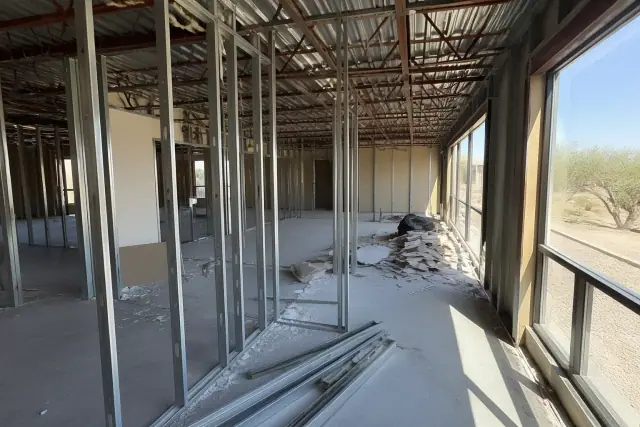
Interior demolition of a commercial office in Scottsdale, AZ, showing exposed studs and desert views through windows.

Interior demolition can strip a property to the studs or slab while leaving the exterior shell intact. We remove drywall, cabinetry, non-load-bearing partitions, fixtures, and finishes, then use dust barriers and negative-air setups to protect spaces outside the work zone. Explore Service

Explore Service

Selective Demolition

Selective demolition in progress at a commercial office space in Scottsdale, AZ, with exposed studs and overhead conduits.

Selective demolition targets only specified elements, such as one wall, a staircase, fixtures, or flooring. The work is sequenced around the renovation plan, with adjoining finishes protected so the contractor can move into framing or installation without avoidable repair work.

Concrete Demolition & Removal

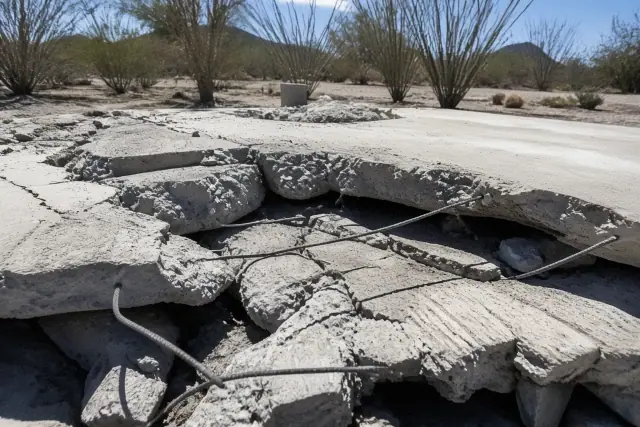
Broken concrete slab with exposed rebar and desert plants in Scottsdale, AZ.

Concrete removal covers driveways, patios, slabs, sidewalks, foundations, and pool decks. Reinforced concrete typically runs $10 to $18 per square foot to demolish because rebar cutting and heavier equipment add labor and disposal weight; we saw-cut clean edges where adjoining concrete remains and recycle broken material when practical.

Pool Demolition & Removal

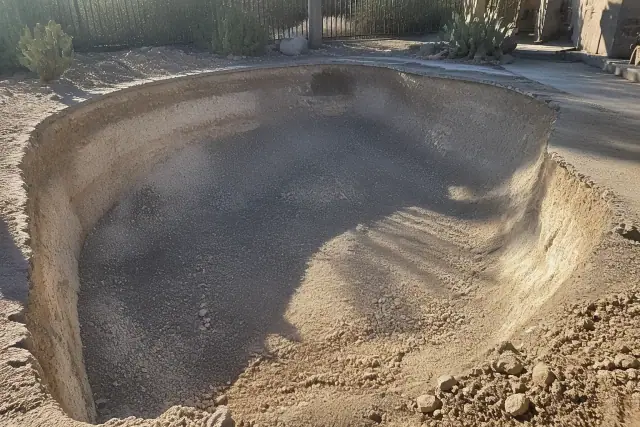
Excavated residential pool site filled with aggregate in Scottsdale, AZ, surrounded by desert landscaping.

Pool removal uses either full removal of the entire shell or partial removal that breaks the bottom for drainage and backfills the shell in place. Both methods require a Scottsdale permit, and backfill must be compacted in lifts with engineered fill to reduce settling in expansive clay and caliche soils.

Structural Demolition

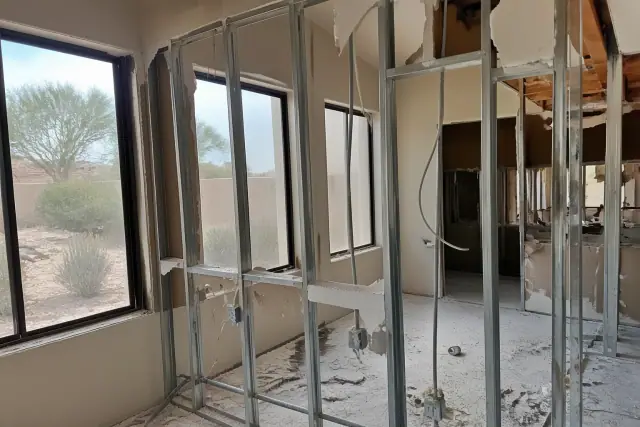
Partially dismantled interior wall and metal studs during a home demolition project in Scottsdale, AZ.

Structural demolition covers load-bearing removals, multi-story work, and full building teardown. These scopes commonly require engineering review before permitting, especially where soil conditions, neighboring structures, or active commercial areas add complexity.

Garage & Shed Demolition

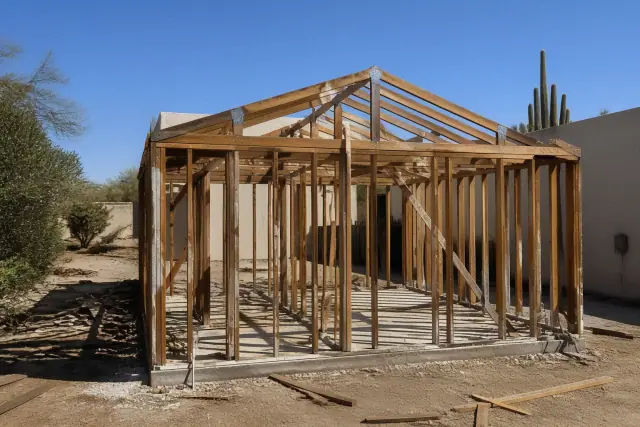
Partially dismantled wooden garage and shed frame with scattered debris at a demolition site in Scottsdale, AZ.

Garage demolition begins with electrical and plumbing disconnects, followed by removal of the structure and slab so the site is ready for new footings. Most single garages complete in one day, while standard-size sheds and their concrete pads can usually be removed with same-day debris haul-off.

Flooring Removal

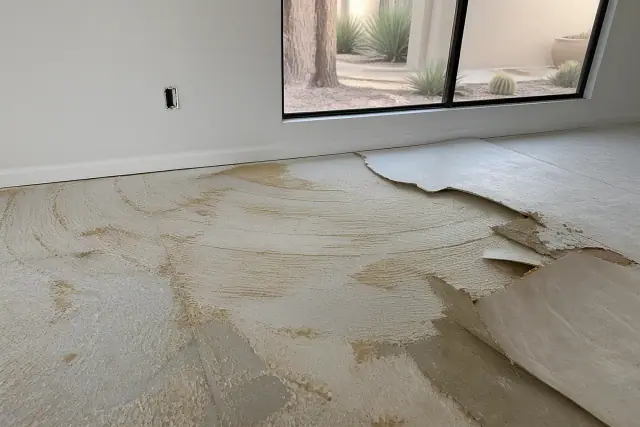
Vinyl flooring removal showing adhesive residue and torn sheets on a subfloor at a job site in Scottsdale, AZ.

Flooring removal covers tile, hardwood, carpet, and vinyl ahead of remodel work. Mastic and thinset are scraped down to the bare slab, surrounding finishes are protected, and flooring debris is separated for facilities that accept recyclable material.

Site Clearing & Debris Removal

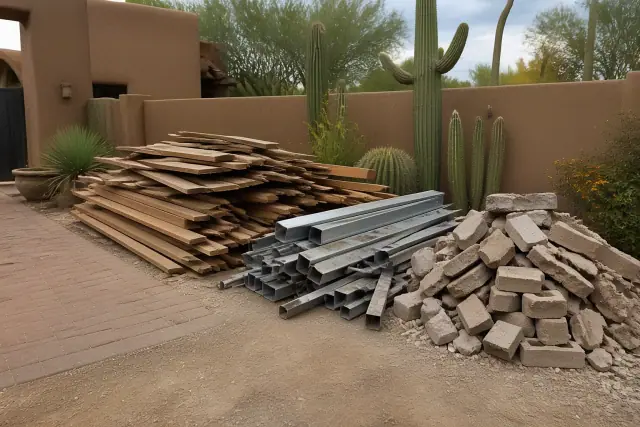
A pile of sorted construction waste including wood, metal, and masonry at a job site in Scottsdale, AZ.

Site clearing completes the demolition scope with debris sorting, haul-off to licensed landfill or recycling facilities, final grading, and site cleanup. Where pool or foundation removal leaves a void, placed backfill is compacted before the property is turned over for its next use.

Project Planning

How to Choose the Right Demolition Scope in Scottsdale

The right approach depends on the structure, the elements being preserved, regulated materials, site access, and the condition required at turnover. A standard single-story Scottsdale home demolition commonly falls between $4,000 and $14,000, while larger custom builds, masonry construction, reinforced concrete, and asbestos abatement can move the total higher. A site walk and itemized estimate clarify those variables before permit work and mobilization begin.

Project Scope and Structure Type

Start by defining whether the project is a full teardown, partial removal, interior gut, or selective scope. A slab-on-grade ranch home requires a different equipment and shoring plan than a two-story custom build with a basement, and the estimate should reflect that difference.

Permit and Utility Coordination

Demolition permits run through City of Scottsdale Planning and Development Services and require documented utility disconnects. Coordination may involve SRP, Southwest Gas, and City of Scottsdale water services before mechanical work can begin.

Hazardous-Material Survey

Any structure built before 1980 must be evaluated for asbestos-containing materials before demolition. The survey and any required Arizona Department of Environmental Quality notification or abatement need to be resolved before the permit and demolition sequence moves forward.

Site Access and Dust Control

Tight Old Town infill lots and larger North Scottsdale parcels call for different equipment, staging, and haul routes. Water trucks and wetting agents control airborne particulate during mechanical demolition, while access planning protects nearby hardscape and occupied areas.

Debris Hauling and Recycling

Disposal is part of the project cost, not an afterthought. Concrete, block, and metal can often be separated for regional recycling or aggregate facilities, while remaining construction debris must go to an appropriate licensed disposal site with manifests where regulated materials are involved.

Itemized Cost Factors

Wood-framed elements typically run $4 to $8 per square foot to demolish, while masonry or block commonly runs $7 to $12 per square foot. Structure size, asbestos abatement, equipment access, utility complexity, and debris-hauling distance complete the pricing picture, so each estimate should identify the actual scope rather than rely on one broad rate.

Scottsdale Demolition Challenges

Common Demolition Problems for Scottsdale Properties

Older materials, hard desert soils, neighboring improvements, and heavy structural components can all change a seemingly simple teardown. Identifying these conditions during the site walk helps prevent stop-work orders, damaged surfaces, settlement, dust complaints, and disposal surprises after work begins.

Request Site Review

Older Materials and Asbestos

Older homes near Old Town may contain asbestos in siding, popcorn ceiling texture, or other materials. Disturbing suspect material before the required survey and abatement path is established creates health, compliance, and scheduling risk.

Caliche and Backfill Compaction

The caliche layer beneath much of the Sonoran Desert soil affects excavation and site preparation. After a pool shell or foundation comes out, engineered fill placed and compacted in lifts helps prevent later settlement.

Tight-Lot Equipment Access

Downtown infill lots may leave little room for an excavator, debris containers, and truck movement. Access must be checked before mobilization so walls, hardscape, landscaping, and occupied neighboring areas can be protected.

Shared Footings and Setbacks

Block walls, carports, patios, casitas, and detached structures may sit near property lines or share footings with improvements that remain. Evaluating those connections and Scottsdale setback requirements prevents an accessory-structure removal from damaging adjacent property.

Dust and PM10 Control

Mechanical demolition and earthmoving can release dust in Scottsdale's dry climate. Maricopa County Air Quality Department Rule 310 addresses dust-control permitting and active suppression for covered work because PM10 particulate remains an ongoing Valley concern.

Heavy Concrete and Rebar

Reinforced slabs, foundations, and pool decks require saw cutting, rebar separation, heavier equipment, and more disposal capacity than wood-framed elements. Clean edge cuts matter when adjoining concrete will stay in place.

Why Choose Us

Why Choose Phoenix Demolition Co. in Scottsdale?

Phoenix Demolition Co. holds an Arizona Registrar of Contractors license and carries the general liability insurance documentation required for Scottsdale permit issuance. Our team has handled hundreds of Scottsdale teardowns and manages surveys, permits, utility coordination, demolition sequencing, debris hauling, and inspections. Every quote can include proof of licensing and insurance along with an itemized scope.

Licensed and Insured Work

Licensing supports correct permit handling, while general liability coverage protects the project property and adjacent properties if damage occurs. Documentation is available with the quote so owners can verify standing before work begins.

Scottsdale Permit Knowledge

Planning and Development Services processes demolition permits from the office at 7447 E Indian School Road. We coordinate survey records, utility disconnect documentation, permit applications, and inspection scheduling so owners do not have to manage separate city and utility steps.

Safety and Environmental Compliance

Work follows OSHA 29 CFR 1926 Subpart T for demolition operations, including engineering surveys, adjacent-structure protection, and utility shutoffs. Dust suppression, regulated-material handling, debris manifests, and practical recycling are integrated into the job plan.

Six-Step Process

Our Demolition Process in Scottsdale

Each project follows a defined sequence adjusted to the structure and site. Most full house demolitions complete within one to three days after permits and utility disconnects clear, with more time needed when asbestos abatement, larger structures, or added inspections are involved.

01.

Site Walk and Estimate

We review structure age, materials, access constraints, neighboring improvements, utilities, and the condition expected at turnover. Those findings become a free, itemized estimate tied to the actual demolition and hauling scope.

02.

Survey and Permit Preparation

Pre-1980 structures receive an asbestos and hazardous-material survey, and structural scopes receive engineering review when required. We then submit the demolition permit package through Scottsdale Planning and Development Services.

03.

Utility Disconnects

Electrical, gas, water, sewer, or septic connections are identified and safely disconnected before teardown. The required documentation is coordinated with the city and the applicable utility providers.

04.

Controlled Demolition

Mechanical or hand demolition is sequenced around the structure, materials, and elements being preserved. Shoring, dust barriers, wetting, clean saw cuts, and adjacent-property protection are used where the scope calls for them.

05.

Debris Sorting and Hauling

Concrete, block, metal, flooring, and mixed construction debris are separated where practical. Loads go to licensed landfill, recycling, or aggregate facilities, with disposal manifests maintained for regulated material.

06.

Final Grading and Cleanup

After debris leaves, the site is cleaned and graded for the next phase. Backfilled areas receive the specified engineered fill and compaction so a removed pool, slab, or foundation does not leave an unstable void.

Project Applications

Demolition Outcomes for Scottsdale Properties & Businesses

Case Study 1: Full House Teardown: Utility coordination, survey and permit work, mechanical demolition, slab removal, debris haul-off, and final grading prepare a residential lot for its next construction phase.

Case Study 2: Interior Remodel Preparation: Drywall, cabinetry, partitions, fixtures, flooring, mastic, and thinset can be removed to expose clean studs or slab while the exterior shell and selected finishes remain protected.

Case Study 3: Pool and Concrete Removal: Full or partial pool removal, clean concrete saw cuts, rebar separation, engineered backfill, and lift compaction leave the site ready for a redesigned yard or future improvements.

Plan Your Project

Schedule a Scottsdale
Demolition
Estimate

Tell us what must be removed, what needs to stay, and what you plan to build or renovate next. We will walk the Scottsdale property, review access and material concerns, and prepare a free estimate that includes demolition, disposal, and site-finish requirements.

Demolition Planning Help

FAQs About Demolition in Scottsdale, AZ

These answers cover Scottsdale permits, cost factors, timing, surveys, service choices, and compliance. A property walk is still the best way to confirm the requirements and estimate for a specific structure.

Call Our Demolition Team

Scottsdale applies its adopted International Building Code and local Scottsdale Revised Code amendments to demolition work. Full and partial demolition require a permit through Planning and Development Services, documented utility disconnects, and compliance with construction-hour, noise, and dust-control rules. We manage the application and inspection scheduling for the contracted scope.

Arizona house demolition generally runs $4 to $17 per square foot depending on construction and site conditions. A standard single-family home demolition in Scottsdale typically falls between $4,000 and $14,000, while larger custom homes, masonry, access constraints, or asbestos abatement can cost more.

At $4 to $17 per square foot, demolition of a 3,000 square foot house generally ranges from $12,000 to $51,000. Standard wood-framed Scottsdale homes of that size often fall closer to $12,000 to $24,000, while masonry, asbestos abatement, limited equipment access, and long debris hauls can push the price higher.

Hand demolition may appear cheapest before dumpster rental, disposal fees, tool costs, permit work, asbestos requirements, and labor time are counted. A detailed itemized quote is safer for comparing costs because it shows what is included and reduces the risk of unpermitted work or missing disposal charges changing the budget mid-project.

Most shed and garage removals in Scottsdale require a city permit, particularly when utilities are connected or the structure is near a property line. The process verifies disconnects and reviews relevant zoning and setback requirements. We include permit coordination in the standard garage and shed demolition scope.

Most single-family home demolitions take one to three days after permits are issued and utility disconnects are confirmed, assuming no asbestos abatement is required. A single garage or standard-size shed often takes one day, while large structural projects, multi-unit buildings, abatement, or additional inspections can extend the work to a week or more.

Yes. Phoenix Demolition Co. holds an Arizona Registrar of Contractors license and carries the general liability insurance documentation required for permit issuance in Scottsdale and Maricopa County. Proof of licensing and insurance is available with the quote for verification before work begins.

Full pool removal excavates the entire shell. Partial removal breaks the bottom for drainage and backfills the remaining shell in place. Scottsdale requires a permit for either method, and engineered fill compacted in lifts is important in expansive clay and caliche soils.

Interior demolition can strip broad areas to studs or slab while retaining the exterior shell. Selective demolition targets only designated elements, such as one wall, a staircase, fixtures, or particular finishes. Both approaches depend on utility isolation, protection of retained areas, and careful debris removal.

The sequence starts with a site walk, estimate, and review of structure age, materials, access, and adjacent improvements. Required asbestos or hazardous-material surveys, City of Scottsdale permits, and utility disconnects are completed before equipment mobilizes. Mechanical demolition begins only after those prerequisites clear.

Reinforced concrete typically costs $10 to $18 per square foot to demolish because rebar cutting, heavy equipment, and disposal weight add work. Standard wood-framed elements generally run $4 to $8 per square foot, while masonry or block commonly runs $7 to $12. Total pricing also depends on thickness, access, clean-cut requirements, and haul distance.

Water trucks and wetting agents suppress airborne particulate during mechanical demolition and earthmoving. Covered projects must account for Maricopa County Air Quality Department Rule 310 and the Valley's PM10 concerns, in addition to Scottsdale work-hour and noise requirements. The site plan should identify water access, staging, and neighboring properties before work starts.

Commercial projects include a pre-demolition survey, documented debris management plan, OSHA-compliant site safety planning, and disposal manifests for regulated materials. Load-bearing or multi-story removal typically receives engineering review before permitting. Active businesses, adjacent structures, and traffic around Scottsdale Road or the Loop 101 corridor can add staging requirements.

Scottsdale coverage includes Old Town Scottsdale, McCormick Ranch, Gainey Ranch, Grayhawk, DC Ranch, Pinnacle Peak, Troon, and the Rio Verde foothills and North Scottsdale corridor. The broader service area named in the project draft also includes Phoenix, Tempe, Paradise Valley, Fountain Hills, Cave Creek, Carefree, and larger work throughout Maricopa County.

Concrete, block, metal, and some flooring debris can be sorted for recycling or aggregate facilities when material type and volume make diversion practical. Remaining construction debris is hauled to an appropriate licensed landfill, and regulated materials require the corresponding disposal documentation. Debris hauling is included in the estimate so disposal does not appear later as an unplanned charge.