Proudly serving Phoenix, Mesa, Scottsdale, Glendale, Chandler, Tempe & surrounding areasCall or Text 24/7: 480-264-9793
Aerial view of Phoenix, AZ residential neighborhoods, saguaro cacti, and desert landscape during golden hour.

Garage & Shed Demolition in Phoenix, AZ for Detached Structures & Concrete Pads

Phoenix Demolition Co. provides garage and shed demolition across Phoenix for wood, metal, and plastic sheds plus attached and detached garages. We can remove concrete pads or garage slabs, haul debris, and prepare the cleared footprint for landscaping or new construction. Tight side-yard jobs are handled with hand tools, while accessible structures may be taken down with skid steers or mini excavators.

Detached structures dating from the 1950s through the 1970s may show wood siding split by four decades of Sonoran Desert sun or metal roofing rusted by monsoon moisture. Our family-owned crew evaluates site access, utility connections, structural ties, and potential asbestos or lead paint before work begins. Active liability coverage, controlled demolition methods, dust suppression, and required permitting help protect the home, block walls, pool equipment, irrigation, and neighboring hardscape.

Structures built before 1980 are screened for asbestos siding or transite roofing before panels come down, and the project scope is based on a free on-site estimate rather than a phone-only quote.

Phoenix Demolition Co. provides garage and shed demolition throughout Phoenix and the surrounding metro, including Mesa, Tempe, Scottsdale, Glendale, and Chandler.

★ ★ ★ ★ ★4.9/5 Average Rating · 20+ Years of Experience · Thousands of Customers Helped · Licensed & Insured · Residential & Commercial

Garage & Shed Demolition Benefits

What Does Garage & Shed Demolition Include?

A complete removal can cover the roof, wall panels, framing, electrical disconnects, attached structural connections, and the concrete foundation or pad. The right sequence depends on whether the structure is wood-framed, metal, plastic, block, or stucco.

Clear-access sites may allow a skid steer or mini excavator, while enclosed side yards often require pry bars, reciprocating saws, concrete saws, and controlled hand demolition. The method is selected after the crew checks gates, block walls, property lines, pool equipment, and irrigation.

After teardown, debris is hauled away, recyclable metal and concrete are separated where accepted, and the footprint is raked and graded. The cleared area can then be left ready for landscaping, storage, an ADU, a casita, a pool, or another construction project.

Benefits of Complete Structure Removal

Professional garage and shed removal combines planning, controlled dismantling, hauling, and site cleanup in one scope. That reduces the need to coordinate separate equipment rental, debris disposal, concrete breaking, and final grading.

  • Wood, metal, plastic, block, and stucco structures
  • Attached or detached garage teardown
  • Hand demolition for narrow side-yard access
  • Mechanical removal where access is clear
  • Concrete pad, slab, and rebar removal
  • Hazard screening for older materials
  • Debris sorting, hauling, and disposal
  • A raked, graded, walkable footprint
Complete Removal Services

Garage & Shed Demolition Services

Each project is scoped around the structure's material, foundation, utility connections, access, and relationship to the home. The work can include a simple backyard shed teardown or the careful separation and removal of an attached garage.

Wooden Shed Demolition

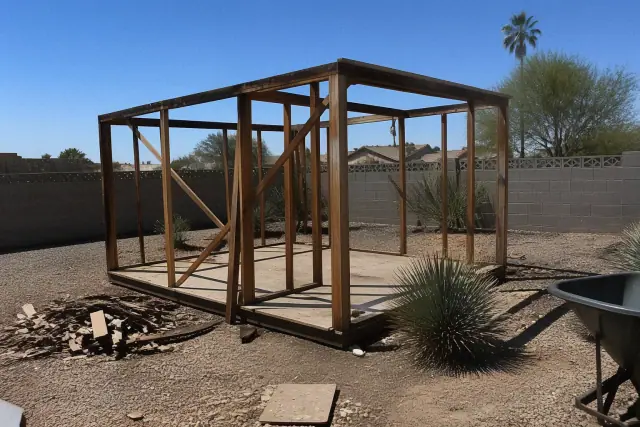
Wooden shed framework undergoing demolition on a gravel lot in Phoenix, AZ.

Wood-framed sheds are dismantled from the roof down so layered roofing, siding, framing, nails, and screws can be controlled and separated. Hand tools are used when the shed sits behind a wall or beside property features that must remain intact.

Request Estimate

Metal & Plastic Shed Removal

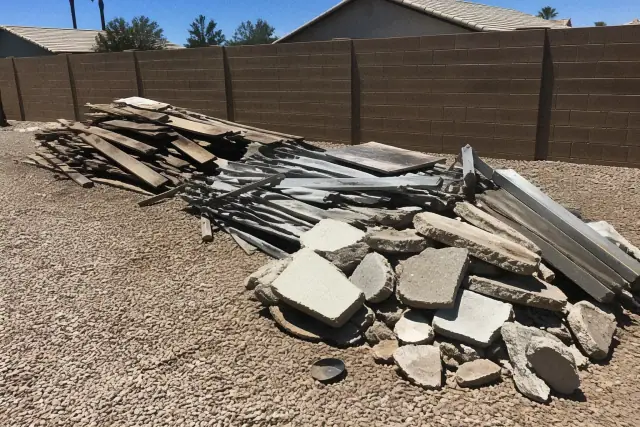
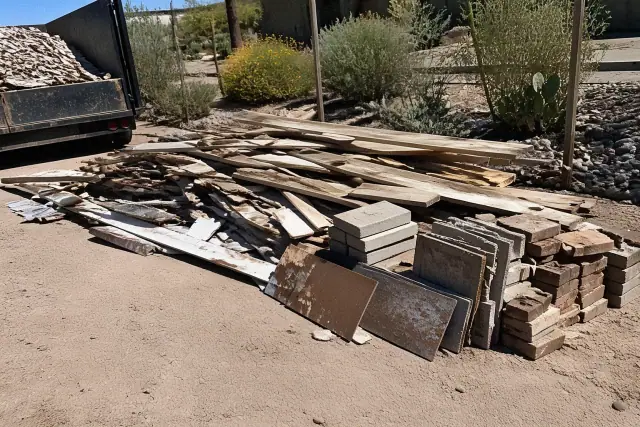
Pile of metal and plastic shed debris on gravel at a garage demolition site in Phoenix, AZ.

Metal panel sheds may be unbolted or cut apart while the crew controls rusted edges and roofing fasteners. Plastic sheds are broken down without mixing reusable or recyclable components into general construction debris where local facilities accept them.

Request Estimate

Detached Garage Demolition

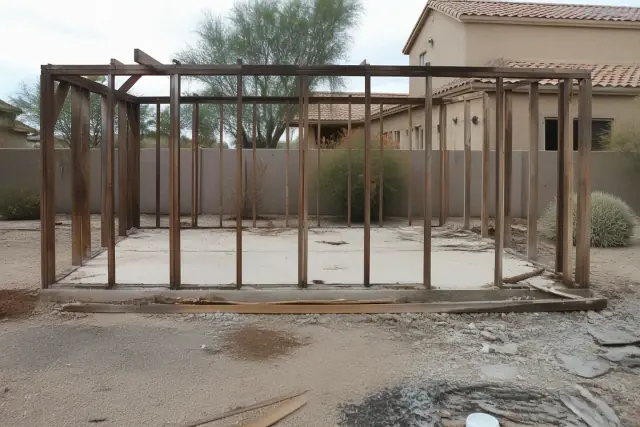
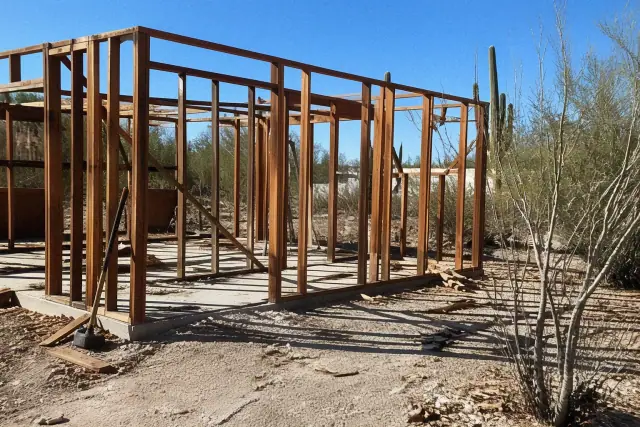
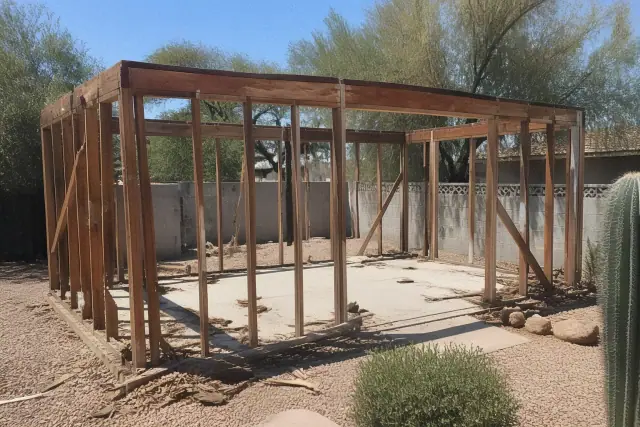
Skeletal wooden frame of a detached garage being demolished in Phoenix, AZ, with desert landscaping in the background.

A detached garage stands apart from the home's roofline and framing, making the structural separation more direct. The scope may still include utility disconnects, roofing, block or stucco walls, a slab foundation, and dust control during breaking and loading.

Request Estimate

Attached Garage Demolition

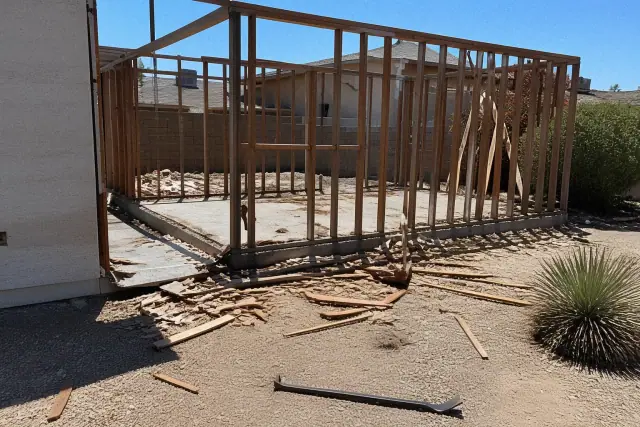
Skeletal wood framing of an attached garage during demolition in Phoenix, AZ.

Attached garage removal requires careful cutting where the garage meets a shared wall or roof connection. The exposed edge is framed and weatherproofed after separation so the remaining home's structure and interior stay protected.

Request Estimate

Concrete Pad & Slab Removal

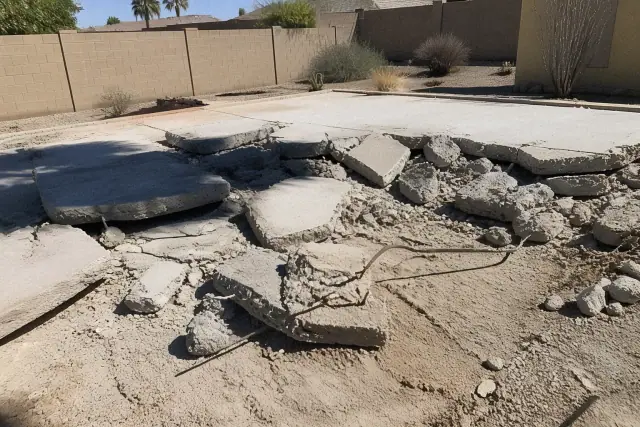
Concrete slab demolition with broken chunks and exposed rebar at a jobsite in Phoenix, AZ.

Most garage slabs are 4 to 6 inches thick, with heavier sections possible where a workshop or car lift was installed. Hydraulic hammers or concrete saws break the slab into manageable pieces before rebar is pulled and the concrete is hauled for recycling.

Request Estimate

Debris Hauling & Site Cleanup

Construction waste and debris from a garage demolition ready for hauling in Phoenix, AZ.

Wood framing, metal roofing, drywall, concrete, and old contents are loaded and hauled as part of the demolition scope. The crew removes loose fasteners and fragments, then rakes and grades the footprint so it is clear and walkable.

Request Estimate
Demolition Options

Structure & Site Demolition Options

Garage and shed projects can require hand dismantling, mechanical breaking, environmental screening, selective cuts, or broader site clearing. The on-site assessment identifies which combination fits the structure and the surrounding property.

Skeletal wooden frame of a small structure during hand demolition in a Phoenix, AZ yard.

Tight-Access Hand Demolition

Hand demolition is suited to sheds and small structures that equipment cannot reach without risking nearby walls, fencing, pools, or irrigation. Components are taken apart in a controlled sequence and carried out through the available access.

  • Pry bars for controlled panel removal
  • Reciprocating saws for wood framing
  • Concrete saws for confined pad cuts
  • Top-down roof and wall dismantling
  • Protection near block walls and hardscape
Request Estimate
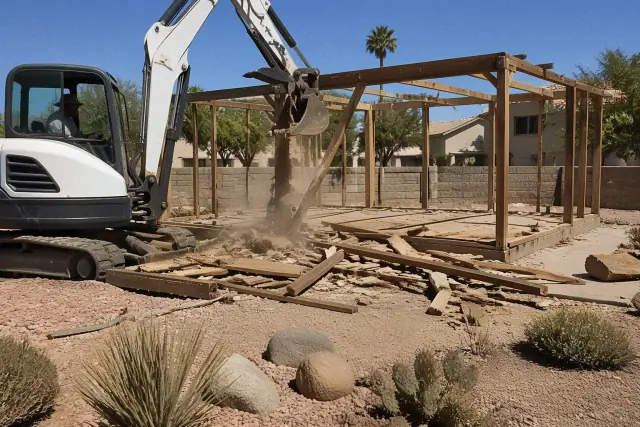
Heavy machinery demolishing a wooden shed frame at a residential property in Phoenix, AZ.

Equipment-Assisted Demolition

When access is clear, compact equipment can shorten the teardown and loading phase while keeping the work inside the planned footprint. Tool size is matched to the structure, slab thickness, rebar density, and room available to maneuver.

  • Mini skid steers for accessible lots
  • Mini excavators for larger structures
  • Hydraulic hammers for concrete
  • Walk-behind saws for precise slab cuts
  • Controlled loading for debris hauling
Request Estimate
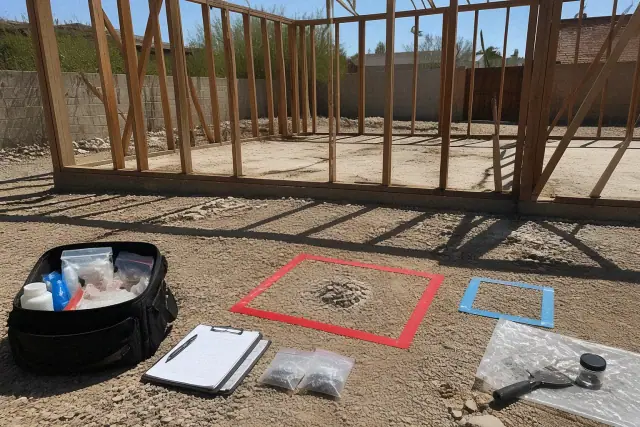
Hazardous material screening tools and testing samples on the dusty ground of a garage demolition site in Phoenix, AZ.

Hazardous Material Screening

Older garage and shed materials are evaluated before mechanical demolition begins. Confirmed hazards are separated from ordinary debris and handled under the applicable Arizona Department of Environmental Quality and NESHAP requirements.

  • Pre-1980 asbestos material screening
  • Transite siding and roofing review
  • Asbestos-containing roofing felt checks
  • Required NESHAP notification when confirmed
  • Trained abatement before mechanical removal
Request Estimate
Skeletal wooden frame of a partially demolished shed in Phoenix, AZ with debris on the gravel ground.

Selective & Attached-Structure Demolition

Selective methods remove a connected garage, wall, addition, or roofline section while preserving the parts of the property that remain. Precise cutting, shoring, framing, and weatherproofing are planned around the shared structural connection.

  • Shared wall and roof separation
  • Protection for load-bearing framing
  • HVAC duct protection where retained
  • Framing of the exposed home edge
  • Weatherproofing after separation
Request Estimate
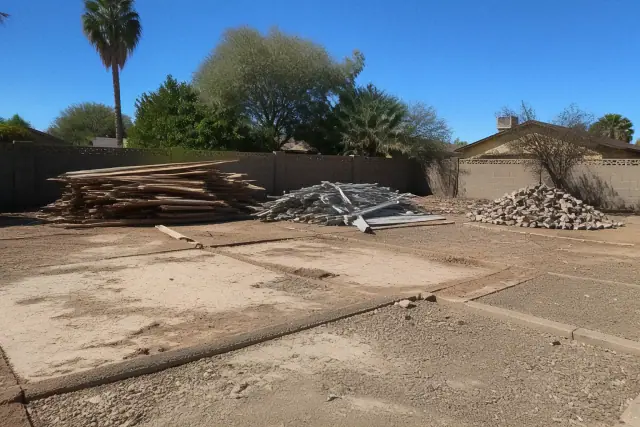
Leveled construction site with piles of sorted scrap wood and metal in a Phoenix, AZ yard.

Site Clearing for New Construction

When removal is the first stage of an ADU, casita, pool, addition, or landscaping project, cleanup is planned around what happens next. The cleared footprint can be graded and compacted to the next contractor's specifications.

  • Wood, metal, and concrete sorting
  • Concrete recycling as aggregate base
  • Fastener and debris-fragment removal
  • Footprint grading and compaction
  • Preparation for the next site use
Request Estimate
Finding Your Right Fit

Choosing the Right Demolition Approach

The right approach depends on structure material, size, access, utility connections, hazardous-material risk, and whether the slab stays or goes. An on-site review also accounts for shared walls, drainage grade, nearby improvements, and the intended use of the cleared space.

On-Site Scope & Clear Pricing

Free on-site estimates account for access, structure material, hazard testing, hauling, foundation removal, and permit costs before scheduling. Professional equipment and an organized crew can bring down a typical shed in a few hours instead of turning it into a full-weekend homeowner project.

Equipment Matched to Site Access

Mini skid steers and excavators are used where the lot offers clear access; hand tools and controlled cuts are used when a structure sits behind a block wall or near a property line. Matching the method to the site limits unnecessary disturbance around the work area.

Licensed, Insured, Family-Owned Crew

Phoenix Demolition Co. follows Arizona Registrar of Contractors licensing standards and carries active general liability insurance. As a family-owned demolition company, the crew that quotes the work is the crew that arrives to complete it rather than a call center dispatching subcontractors.

What Sets Us Apart

Why Choose Us for Garage & Shed Demolition?

The scope can include City of Phoenix demolition permits, required inspections, hazardous-material coordination, Maricopa County dust controls, teardown, hauling, and final grading. Wetting debris during breaking and loading helps address the region's dust and PM10 concerns while the crew works within local requirements.

Get a Free On-Site Estimate

Sun-Damaged & Aging Structures

Split wood siding, sagging framing, pest activity, and monsoon-rusted metal roofing can turn an unused structure into a safety and resale concern. Controlled removal clears the failing structure without treating the surrounding yard as part of the demolition zone.

Hidden Fasteners & Sharp Metal

Old lumber can conceal nails, screws, and roofing fasteners, while rusted panels create sharp edges during handling. A rented dumpster alone can cost $170 or more before the first wall is removed, and ordinary residential trash collection generally does not accept construction debris.

Asbestos & Lead Paint Concerns

Structures from before 1980 may contain asbestos in siding, transite panels, roofing, or roofing felt, while paint applied before 1978 may contain lead. Screening before demolition keeps confirmed hazardous material out of ordinary debris and routes it through the required handling process.

Tight Side-Yard Access

Older Phoenix lots can place a shed behind a block wall with pool equipment, irrigation lines, fencing, or neighboring hardscape close by. When compact equipment cannot reach the structure safely, the crew switches to hand demolition and controlled cuts.

Attached Structural Connections

An attached garage shares a wall, roof connection, or both with the home, so removal cannot be treated like an independent shed teardown. The connection must be cut carefully, with the remaining edge framed and weatherproofed to protect structural integrity.

Concrete Slabs & Caliche Soil

Embedded rebar, thicker workshop sections, and hard caliche close to the surface can add work to foundation removal. The concrete is cut or broken into manageable pieces, rebar is removed, and the excavation is prepared for the planned finish.

How It Works

Our Garage & Shed Demolition Process

The core three-step process covers assessment, safe demolition, and final cleanup; the six checkpoints below show how planning, compliance, teardown, hauling, and site preparation fit together. Each project is adjusted for structure type, access, utilities, hazards, and the desired condition of the cleared footprint.

01.

On-Site Assessment

The crew measures the structure, identifies its materials, checks the foundation, and reviews access around walls, gates, pools, and landscaping. The intended next use of the footprint is also documented for cleanup and grading.

02.

Hazardous Material Screening

Older siding, roofing, felt, and painted surfaces are checked for asbestos or lead concerns before teardown. If a hazard is confirmed, notification and abatement occur before mechanical demolition under the applicable requirements.

03.

Permits & Utility Disconnects

Required City of Phoenix permits and inspections are coordinated for structural demolition, and power or water connections are confirmed disconnected. Dust controls and any air-quality requirements are included in the work plan.

04.

Controlled Demolition

Walls and roofing are cut, pried, or mechanically broken from the top down to control collapse. Attached connections and tight property edges receive precise cuts, while debris is wetted as needed for dust suppression.

05.

Sorting & Debris Hauling

Metal, wood, concrete, and general construction waste are separated for the appropriate destination, with concrete routed to recycling where accepted. Debris is loaded and hauled the same day in most cases rather than left in the yard.

06.

Final Grading & Cleanup

The footprint is checked for fasteners and debris fragments, then raked and graded. It can be left as safe bare ground or prepared for landscaping, storage, a pool, an ADU, a casita, or another building project.

Plan Your Removal

Request a Garage & Shed
Demolition
Estimate

Schedule a free on-site review to confirm structure type, access, utilities, hazard screening, concrete removal, hauling, permits, and the desired finish for the cleared area. The resulting quote reflects the full project scope rather than only the teardown.

Project Questions

Garage & Shed Demolition FAQs

These answers cover common Phoenix questions about contractors, costs, timelines, permits, access, materials, foundations, hazards, hauling, and site preparation. A site visit is still needed to confirm the scope for a specific property.

Call for Project Help

Call a licensed demolition contractor when the shed has a concrete pad, utility connections, or material that may contain asbestos. Phoenix Demolition Co. can scope teardown, pad removal, debris hauling, and required hazard screening together during an on-site estimate.

Shed removal in Phoenix runs roughly $200 to $2,000 depending on size, material, and access. A small 8x8 or 8x10 shed typically costs $300 to $1,000; a medium 10x12 or 12x12 shed runs $600 to $2,000; and a 12x16 or larger shed can reach $1,200 to $2,500 or more when concrete or hazardous material is involved.

Garage demolition typically averages $792 to $2,461, with square footage, wall material, site access, and slab removal affecting the scope. Attached garages generally cost more than detached garages because the shared wall or roof connection requires more careful separation.

A standard backyard shed typically takes two to four hours once the crew is on-site, including loading debris. A larger shed, a concrete pad, or tight access that requires hand demolition can extend the work to a half day or full day, while garage removal generally takes longer.

Detached garages and most structural demolition require a permit through the City of Phoenix Planning and Development Department, while some small utility sheds may not. Utility connections and permanent foundations can affect the requirement, and Phoenix Demolition Co. handles required permits and inspections as part of the process.

The service covers wood-framed, metal-panel, and plastic sheds, including structures bolted to concrete pads. The dismantling method changes with the material, roofing layers, fasteners, access, and whether the pad is included.

A detached garage stands independently, so its roofline and framing are not tied to the home. An attached garage must be cut away at the shared wall or roof connection, then the exposed edge is framed and weatherproofed.

Yes. Hydraulic breakers or concrete saws divide the pad or slab into manageable sections, embedded rebar is removed, and the concrete is hauled to a recycling facility rather than a standard landfill where possible.

Potential asbestos siding, transite roofing, roofing felt, or lead paint is screened before demolition. When hazardous material is confirmed, required notification and trained abatement take place before mechanical demolition, and the material is disposed of under the applicable Arizona protocols.

Yes, when the site can be handled safely with controlled hand demolition. Pry bars, reciprocating saws, and concrete saws let the crew dismantle and carry out sections when skid steers or mini excavators cannot get behind a block wall.

Debris hauling and disposal are included in the project scope described in the on-site quote. Metal and concrete are separated for recycling where local facilities accept them, while remaining construction waste is taken to the appropriate disposal facility.

Yes. After debris and fasteners are removed, the footprint can be raked, graded, and compacted for an ADU, casita, pool, addition, landscaping, storage, or another planned use.

Garage and shed demolition is available throughout Phoenix and the surrounding metro. The stated service area includes Mesa, Tempe, Scottsdale, Glendale, and Chandler.