Proudly serving Phoenix, Mesa, Scottsdale, Glendale, Chandler, Tempe & surrounding areasCall or Text 24/7: 480-264-9793
Aerial view of Phoenix, AZ residential neighborhoods, saguaro cacti, and desert landscape during golden hour.

Demolition Services in Mesa, AZ for Residential, Commercial & Interior Projects

Phoenix Demolition Co. provides residential, commercial, and interior demolition throughout Mesa, Arizona. Our crews also handle selective and structural demolition, concrete and pool removal, garage and shed demolition, flooring removal, and site clearing with debris hauling. We scope each project around construction type, lot access, foundation conditions, and utility disconnects. Homeowners, contractors, investors, and property managers can request a free written estimate after a site visit.

Mesa properties range from 1930s adobe and block buildings to 1960s slab-on-grade ranch homes and newer stucco-over-frame construction. Expansive caliche, monsoon-driven soil movement, and older materials can add excavation, dust-control, and testing requirements. We coordinate Mesa permits and utility disconnects before equipment mobilizes, then sort debris and restore the site for its next use. Call us when you need a demolition plan built around local conditions instead of a phone-photo guess.

We work from downtown Mesa and the Fiesta District to Dobson Ranch, Red Mountain, Las Sendas, Eastmark, Superstition Springs, and the Cactus Corridor, as well as Tempe, Chandler, Gilbert, Queen Creek, Apache Junction, and supported East Valley areas.

★ ★ ★ ★ ★4.9/5 Average Rating - 20+ Years of Experience - Mesa Demolition Contractor Specialists - Residential & Commercial
Demolition Services
Demolition Services in Mesa, AZ

Choose a complete teardown, a targeted removal, or a combined clearing scope based on what must stay, what must go, and how the site will be used next. The service cards below reflect the work described in our Mesa demolition draft. For project-planning context elsewhere in the Phoenix metro, see our demolition guidance for Scottsdale, AZ .

Residential Demolition

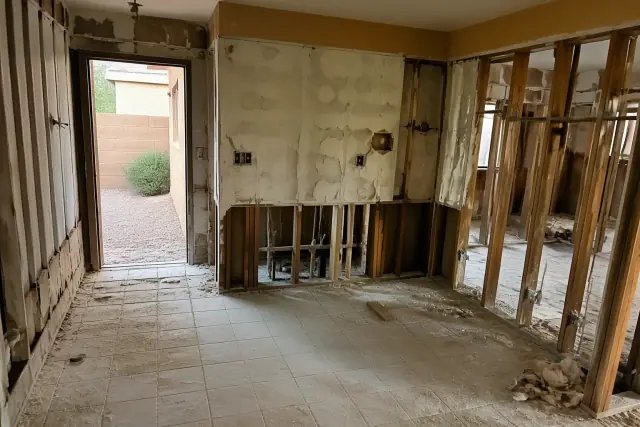
Residential home interior during a demolition project with exposed wall framing and construction debris in Mesa, AZ.

We tear down fire-damaged, storm-damaged, outdated, and rebuild-ready homes, including the structure, foundation, and final grading when the scope calls for a complete site. Construction type, access, utilities, and material testing are reviewed before mobilization. Explore Service

Explore Service

Commercial Demolition

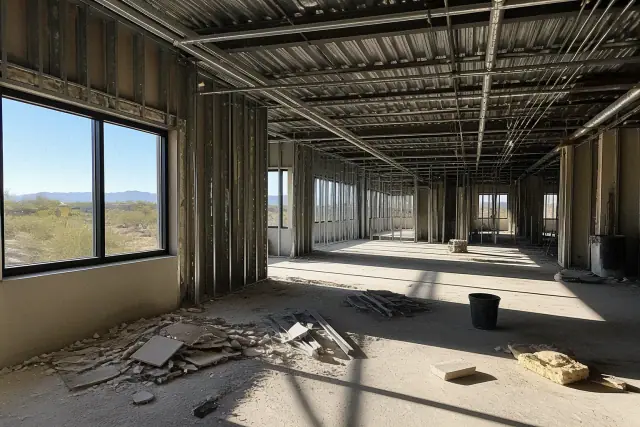
Interior view of a commercial demolition jobsite in Mesa, AZ, showing exposed structural studs and utility conduits.

Commercial demolition covers retail strips, office build-outs, and light industrial spaces, with schedules coordinated around tenant timelines. We also work with the Mesa Building Safety Division on required permits and inspections. Explore Service

Explore Service

Interior Demolition

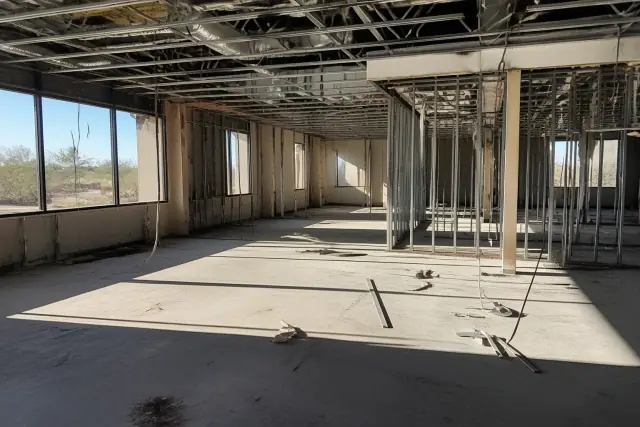
Interior demolition of an office space with exposed studs and wiring in Mesa, AZ.

Interior demolition prepares kitchens, bathrooms, and full gut renovations by removing finishes, fixtures, flooring, and non-structural walls. Poly barriers and negative-air setups help contain dust, and debris can be hauled the same day when the scope allows. Explore Service

Explore Service

Selective Demolition

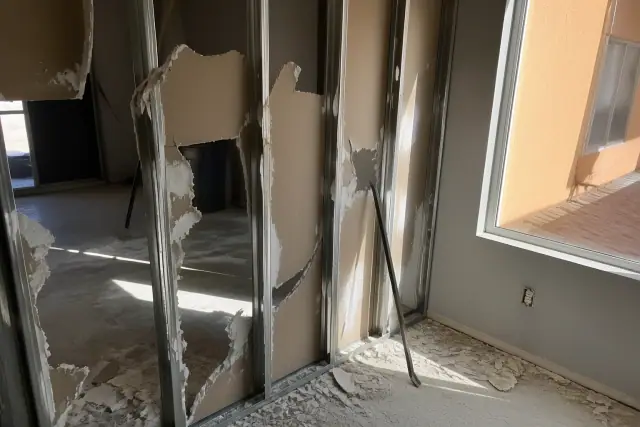
Selective demolition of a drywall partition wall with exposed metal studs at a jobsite in Mesa, AZ.

Selective demolition removes specific walls, fixtures, finishes, or structural elements while preserving the rest of the building. It is a precision-focused option for remodels where the shell or adjacent spaces must remain intact.

Concrete Demolition & Removal

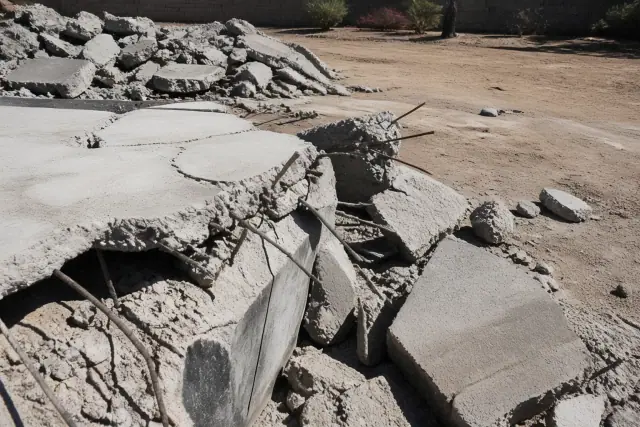
Fractured concrete slab with exposed rebar and debris at a demolition site in Mesa, AZ.

Driveways, patios, slabs, and sidewalks can be broken with hydraulic hammers or saw-cut where cleaner edges are needed. Removed concrete is hauled to licensed recycling facilities rather than left onsite.

Pool Demolition & Removal

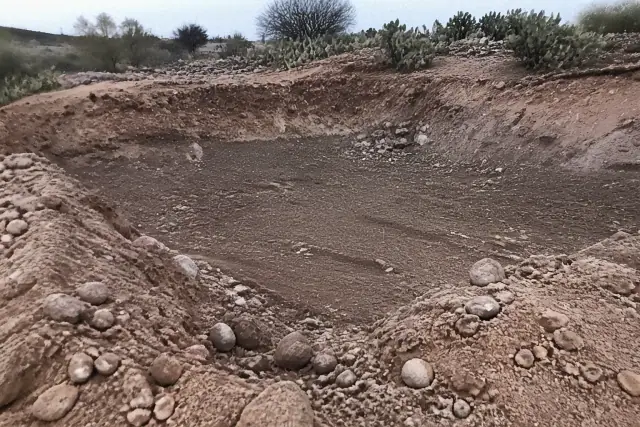
A hollowed pool basin filled with aggregate and soil during a demolition project in Mesa, AZ.

For an unused gunite pool, full removal excavates the shell while partial fill breaks and perforates the bottom for drainage. The cavity is then backfilled with compacted engineered soil to reduce future settling.

Structural Demolition

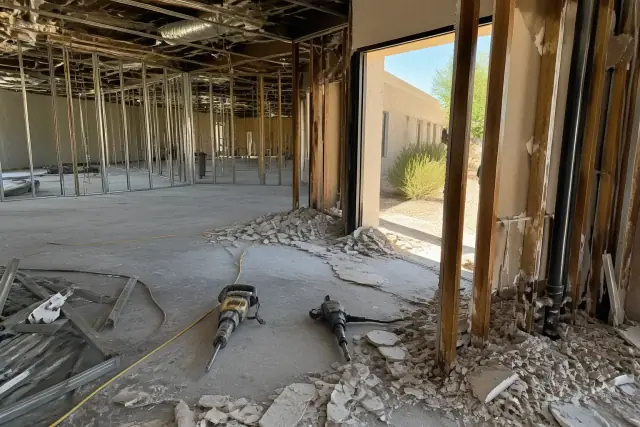
Structural demolition of an office interior with exposed wall studs and debris on the floor in Mesa, AZ.

Load-bearing walls, roof structures, and foundations require controlled removal backed by engineering review and permit approval. We confirm those requirements before touching a beam or other structural component.

Garage & Shed Demolition

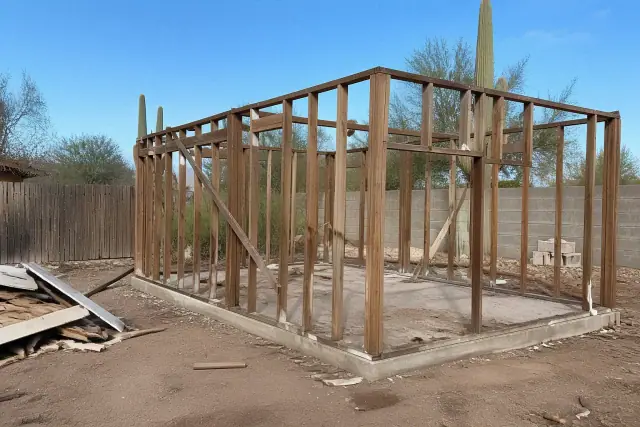
Skeletal wooden framework of a garage during a demolition project in Mesa, AZ, with desert landscaping in the background.

Detached and attached garages, sheds, workshops, and other outbuildings are removed with attention to shared roof lines and electrical runs. Smaller structures can often be removed and hauled off during one coordinated visit when conditions allow.

Flooring Removal

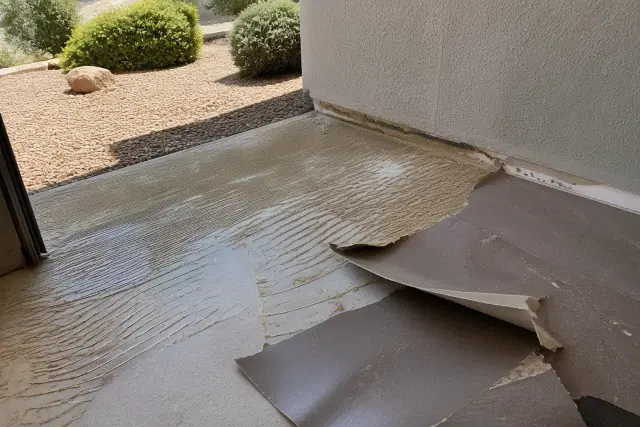
Vinyl flooring removal showing adhesive residue on a subfloor at a jobsite in Mesa, AZ.

Tile, hardwood, carpet, vinyl, mastic, and underlayment are removed down to subfloor grade. This gives the flooring contractor a clean surface for the next phase of the remodel.

Site Clearing & Debris Removal

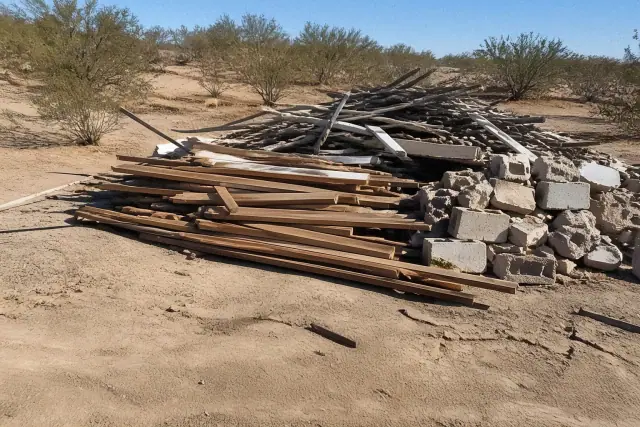
Sorted construction debris including wood, metal, and masonry piles at a jobsite in Mesa, AZ.

Site clearing removes structures, hardscape, vegetation, and debris before grading the pad for new construction or resale. Around Eastmark and Signal Butte Road, that can include mechanical clearing of desert brush and caliche outcroppings, followed by sorting concrete, metal, and wood for appropriate facilities.

Scope Planning

Choosing the Right Demolition Scope in Mesa

Mesa's 504,258 residents and its position as Arizona's third-largest city create an unusually broad mix of property ages, construction methods, and lot conditions. A useful scope starts by identifying the structure and foundation, what must remain, access for equipment, utility locations, testing needs, permits, disposal, and the required finish grade.

Construction & Foundation Type

Mesa ranch homes built from the 1950s through the 1970s often use slab-on-grade block construction, while later developments commonly use wood framing and stucco. With much of that older housing stock now 50 to 70 years old, the material and foundation type directly affect equipment, breaking time, and hauling weight.

Full or Selective Removal

A full teardown removes the structure and can include the foundation and grading; selective work removes only targeted components. If a sound shell, adjacent finish, or usable portion of the property can remain, a narrower scope may reduce disruption and unnecessary disposal.

Equipment Access & Utility Locations

Lot width, gates, neighboring structures, easements, overhead lines, and buried services determine what equipment can reach the work safely. Utility disconnects and any needed rerouting must be confirmed before demolition begins.

Pre-1978 Material Testing

Older flooring, siding, and pipe insulation can contain asbestos. We test structures built before 1978 under Arizona Department of Environmental Quality requirements, and confirmed material must be handled through licensed abatement before demolition proceeds.

Permits & Engineering Review

Permit needs, setback and easement checks, and inspection requirements belong in the plan before mobilization. Structural changes to load-bearing walls, roof systems, or foundations also require documented engineering review and approval.

Disposal & Site Restoration

Compare written estimates by included removal, permit responsibility, debris sorting, haul-off, fill, and grading rather than the headline price alone. A complete scope should state whether the site will be merely cleared or left level and ready for construction or resale.

Mesa Property Challenges

Common Demolition Challenges on Mesa Properties

Demolition is often the practical next step when repair no longer fits the property's condition or the owner's plans. The common Mesa situations below call for different combinations of testing, selective removal, structural work, clearing, and restoration.

Request a Site Visit

Cracked Slabs & Soil Movement

Expansive soil and hard caliche layers can contribute to settlement, cracking, and difficult excavation. When structural repair is no longer cost-effective, the demolition scope must account for both the damaged slab and the ground below it.

Fire- or Storm-Damaged Structures

Fire and storm damage can leave unstable framing, compromised finishes, and exposed utilities. A site-specific plan identifies what can be entered safely, what must be removed, and how debris will be contained and hauled.

Unused Gunite Pools

Many mid-century Mesa properties still have gunite pools that no longer fit the owner's use of the yard. The key decision is whether to excavate the shell fully or use a partial-fill approach with drainage openings and compacted engineered soil.

Outdated Interior Layouts

A remodel may require kitchens, bathrooms, flooring, fixtures, or non-structural walls to come out while the shell remains. Dust containment, careful separation from retained finishes, and clean subfloor preparation matter more than brute force.

Aging Garages & Outbuildings

Old garages, sheds, and workshops can interfere with a remodel, lot sale, or new construction plan. Attached structures require extra attention to shared roof lines, remaining walls, and electrical connections before removal.

Debris- and Brush-Covered Lots

Vacant and post-demolition lots may still hold hardscape, vegetation, mixed debris, hidden foundations, or caliche outcroppings. Coordinated clearing and grading prepares the pad without splitting the work across repeated mobilizations.

Why Choose Us

Why Choose Phoenix Demolition Co. in Mesa?

Our demolition-focused team has experience across structural teardowns, pool removals, and interior strip-outs in the Phoenix metro. We combine that field background with Mesa permit coordination, local construction knowledge, written scoping, and communication when buried tanks, unmarked utilities, or hidden foundations change the plan.

Permit & Utility Coordination

We pull project permits through the City of Mesa Building Safety Division and coordinate disconnect notices with Salt River Project, Southwest Gas, and the City of Mesa water department before equipment arrives.

Mesa Soil & Building Knowledge

Our crews plan differently for shallow caliche, legacy plumbing or electrical systems, older block construction, and newer frame-and-stucco homes. Summer heat and monsoon weather also shape crew scheduling, dust suppression, and erosion control.

Licensed & Insured Demolition Work

Phoenix Demolition Co. holds the licensing required by the Arizona Registrar of Contractors for demolition work and carries general liability coverage. That coverage protects the project property, neighboring structures, and utility infrastructure throughout the work.

Planning to Restoration

Our Demolition Process in Mesa, AZ

Each project moves from an onsite scope review through permits, preparation, controlled removal, responsible haul-off, and restoration. The exact equipment and controls change with the structure, but utility safety, dust management, disposal, and the intended final grade stay part of the plan.

01.

Site Visit & Written Scope

We walk the property, identify the materials and construction type, review access, locate obvious utility concerns, and confirm what must remain. The written estimate then lays out scope, timeline, disposal, and permit responsibility.

02.

Permits & Utility Disconnects

We confirm Mesa setback and easement requirements, pull the required permit, and schedule disconnect notices. SRP, Southwest Gas, and City of Mesa water coordination is completed before equipment mobilizes.

03.

Testing & Site Controls

Older structures receive the required asbestos-material testing, and utilities are capped or rerouted as needed. Dust and erosion controls are set for the site under Maricopa County Air Quality Department particulate rules.

04.

Controlled Demolition

Crews use manual methods, excavators, skid steers, hydraulic breakers, or saw-cutting according to the structure and retained areas. Selective work protects the shell and adjacent finishes, while mechanical demolition handles larger structural scopes.

05.

Debris Sorting & Haul-Off

Concrete, metal, and wood are separated from mixed waste when recyclable. Loads are routed to licensed Maricopa County transfer stations, recycling facilities, or landfill facilities as appropriate.

06.

Grading & Compacted Fill

After removal, excavated areas are filled with compacted material to reduce future settling and the lot is graded level. The finished site is prepared for its next phase, whether that is construction, landscaping, or resale.

Planned Results

Demolition Outcomes for Mesa Properties

Case Study 1: Complete Home Teardown: The structure and foundation are removed, debris is hauled, and the lot is graded so the property is ready for a rebuild rather than merely empty.

Case Study 2: Interior Renovation Prep: Targeted walls, fixtures, flooring, mastic, and underlayment are removed while the retained shell and adjacent finishes are protected for the remodel.

Case Study 3: Pool and Lot Clearing: The selected pool-removal method is combined with hardscape, vegetation, and debris clearing, followed by engineered backfill and a level finish grade.

Plan the Next Step

Plan Your
Mesa Demolition
Project

Request a site visit for a written estimate based on the actual structure, foundation, access, utilities, testing needs, disposal plan, and finish grade. We will clarify what the scope includes before you approve the work.

Mesa Demolition Help

FAQs About Demolition in Mesa, AZ

These answers cover the cost, timing, permits, testing, demolition methods, disposal, and site-restoration questions Mesa property owners commonly need to resolve before work begins.

Call Our Demolition Team

National home demolition averages $6,000 to $25,000, or roughly $4 to $17 per square foot, with an average around $10,000. Most single-family Mesa projects land at $10,000 to $18,000; wood-frame homes are closer to $4-8 per square foot, while block or masonry homes commonly run $7-12 per square foot. Size, foundation, access, materials, basements, and pools can change the actual estimate.

Mechanical demolition is usually less expensive than deconstruction, which can run 17-25% higher because materials are carefully dismantled for salvage. Selective demolition can cost less than a full teardown when part of the structure can stay, and combining pool, garage, and house removal in one mobilization may reduce repeated setup costs.

The three general categories are manual demolition with hand tools and small equipment, mechanical demolition with excavators and hydraulic breakers, and implosion or explosive demolition for large structures. Mesa residential work is usually mechanical, with manual methods used for interior and selective removal; explosive demolition is not practical for typical single-family projects.

Mechanical demolition of a standard single-family home typically takes one to five days once permits are approved and utilities are disconnected. Permitting and utility coordination usually add one to three weeks, while asbestos testing or abatement can add several days. Final grading and site restoration typically add another day or two.

Phoenix Demolition Co. pulls the required demolition permit through the City of Mesa before crews mobilize and confirms setbacks, easements, and inspection needs. Load-bearing walls, roof structures, and foundations also require documented engineering review and permit approval before structural removal.

Pre-1978 structures are tested for asbestos-containing materials under Arizona Department of Environmental Quality requirements. Older flooring, siding, and pipe insulation are among the materials that can present a risk, and licensed abatement must occur before demolition when testing confirms asbestos.

Full pool removal excavates the entire shell. Partial fill breaks and perforates the bottom for drainage, then uses compacted engineered soil to fill the cavity and reduce future settling. The appropriate choice depends on the property plan and required final condition.

The project plan must address the services connected to the property before equipment arrives. Our Mesa process includes coordination with Salt River Project, Southwest Gas, and the City of Mesa water department, plus capping or rerouting utilities where needed.

Yes. Concrete demolition covers driveways, patios, sidewalks, slabs, and foundations, using hydraulic hammers for breaking or saw-cutting where cleaner edges are needed. Foundation removal is also part of a complete home teardown when included in the written scope.

Debris hauling is included in every project scope. Concrete, metal, and wood are separated from mixed waste when recyclable, then routed through licensed Maricopa County transfer stations, recycling facilities, or landfill facilities as appropriate.

Interior work can use poly barriers and negative-air setups to contain dust, while exterior scopes use dust and erosion controls described under Maricopa County Air Quality Department rules. Summer work is scheduled around peak heat where practical, and the June-through-September monsoon season adds wind and erosion considerations.

Service coverage includes downtown Mesa, the Fiesta District, Dobson Ranch, Red Mountain, Las Sendas, Eastmark, Superstition Springs, the Cactus Corridor, and the Riverview area. We also serve Tempe, Chandler, Gilbert, Queen Creek, Apache Junction, and unincorporated Maricopa County pockets bordering the Salt River Pima-Maricopa Indian Community.

Smaller sheds are usually removed within a single day, with debris hauled during the same visit. Garage timing depends on whether the structure is attached, shares a roof line, contains electrical runs, or needs extra protection for the remaining home.

The estimate should identify the removal scope, anticipated timeline, disposal plan, permit responsibility, and intended site condition. Foundation type, square footage, material composition, access, utility locations, and possible hazardous-material testing should be addressed after the site visit rather than guessed from a photo.

After the structure or selected materials are removed, excavated areas are filled with compacted material to reduce future settling and the lot is graded level. A complete teardown can leave the property ready for new construction or resale, while interior work leaves retained areas prepared for the next trade.