The Cost Answer
There is no single flat price because removing a shallow vinyl pool is different from demolishing a deep reinforced concrete shell. The estimate should match the pool type, site conditions, and intended use of the cleared area.
Phoenix Demolition Co. explains why pool removal costs in Phoenix vary widely before a homeowner requests an estimate. Pool construction, demolition method, equipment access, disposal, backfill, permitting, and future plans for the site all affect the final scope.
There is no single flat price because removing a shallow vinyl pool is different from demolishing a deep reinforced concrete shell. The estimate should match the pool type, site conditions, and intended use of the cleared area.
Partial removal breaks away the top 18 to 24 inches of the shell, punctures the floor for drainage, and backfills the basin. Full removal extracts the entire shell, rebar, gunite or fiberglass material before clean fill is compacted in engineered lifts.
Compare bids for permitting, demolition, debris hauling, backfill compaction, and final grading. A lower number can grow through change orders when disposal or site restoration is left outside the quoted scope.
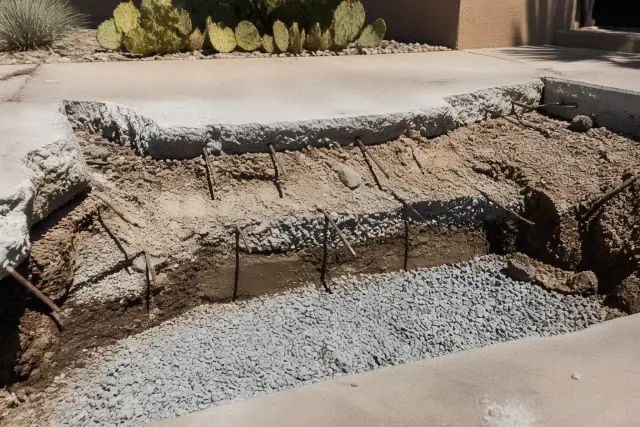
The opened upper shell, drainage holes, remaining structure, and layered backfill. This reveals why a fill-in costs less but can limit future construction.
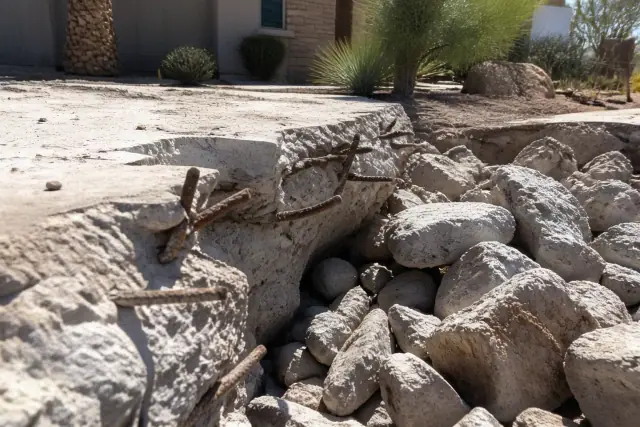
The complete concrete or fiberglass shell being extracted with plumbing and reinforcement. The added breaking, hauling, clean fill, and compaction explain the larger scope.
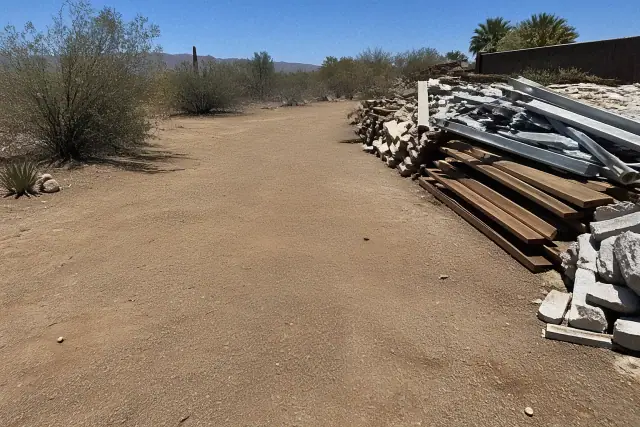
Excavation equipment moving through a tight side yard near mature landscaping. Access restrictions can slow demolition and increase labor in established Phoenix neighborhoods.
Choose full structural removal when an addition, garage, shed, paving, or other permitted construction may occupy the former pool footprint. A final compaction inspection confirms the site meets the approved plan.
Narrow gates, mature landscaping, hillside lots, and caliche-heavy soil can require smaller equipment or mechanical breaking attachments. Those conditions add handling time even when two pools are similar in size.
Pool water containing chlorine or salt must be handled under Maricopa County Environmental Services requirements. Concrete, rebar, and gunite debris then goes to a licensed landfill or recycling facility.
Phoenix has more than 100 days above 100 degrees each year. Early starts from May through September help protect crews and keep concrete curing and backfill compaction work consistent.
| Pool or Removal Type | Draft Cost Range | What Drives the Scope |
|---|---|---|
| Full inground removal | $4,150 to $25,000 | Complete shell, rebar, debris, backfill, and grading |
| Partial removal or fill-in | $8,000 to $16,000 | Upper shell removal, drainage openings, and backfill |
| Fiberglass pool | $6,000 to $15,000 | Faster shell extraction than concrete gunite |
| Vinyl liner pool | $4,000 to $10,000 | Less shell breaking than concrete construction |
| Above-ground pool | Often under $2,000 | Disassembly and pad leveling without extensive backfill |
The broad range is a planning tool, not a substitute for a site-specific quote. A complete estimate should identify the removal method, included demolition and disposal, backfill specification, compaction, grading, permit work, and any engineering needed for the property.
A useful quote starts with four questions: how large, how deep, what material, and how accessible is the pool? A standard 15,000-gallon backyard pool needs less excavation and fill than a diving pool exceeding 8 feet deep. Tight access around mature landscaping in Arcadia or Encanto and hillside conditions in Paradise Valley or North Phoenix can move a project higher within the range. Disposal distance and the volume of concrete, rebar, gunite, or fiberglass also affect hauling costs.
Yes, structural pool removal requires a City of Phoenix demolition permit, an approved backfill and compaction plan, and often a final inspection; published guidance indicates Arizona also requires a licensed contractor for this work. Full removal is the better fit when future construction is planned, while partial removal leaves shell material that can settle. For an unused pool, compare the one-time removal price with the published estimate of $3,000 to $6,000 in annual maintenance, chemicals, and repairs over a five- to ten-year horizon. After approved full removal and compaction, the site may be used for landscaping, hardscape, or a new structure within the permit scope.
Share the pool type, approximate size and depth, access constraints, and your plans for the cleared area. A site walk can turn the guide's broad ranges into a written scope covering permits, demolition, backfill, debris removal, and final grading.